Heat Pump Backup Heat and Dual Fuel
Backup heat is the second heat source, electric strips or a gas furnace, that helps a heat pump on the coldest nights; in the valley, rebate rules and your thermostat decide when it runs.
Written by the Upvalley Heat desk from manuals and official pages · how figures are sourced · Rechecked
Ownership note: Upvalley Heat belongs to the same ownership group as PlumbingSupplyAndMore, Central Plumbing & HVAC, SoftPro Water Systems and Quality Water Treatment, the businesses this page links to. Figures here come from federal, Colorado, county and utility pages and from manufacturers' installation manuals, read in October 2026. What a store says about its own products is the store's claim, not a finding of this site. How partner links work here
First tracks
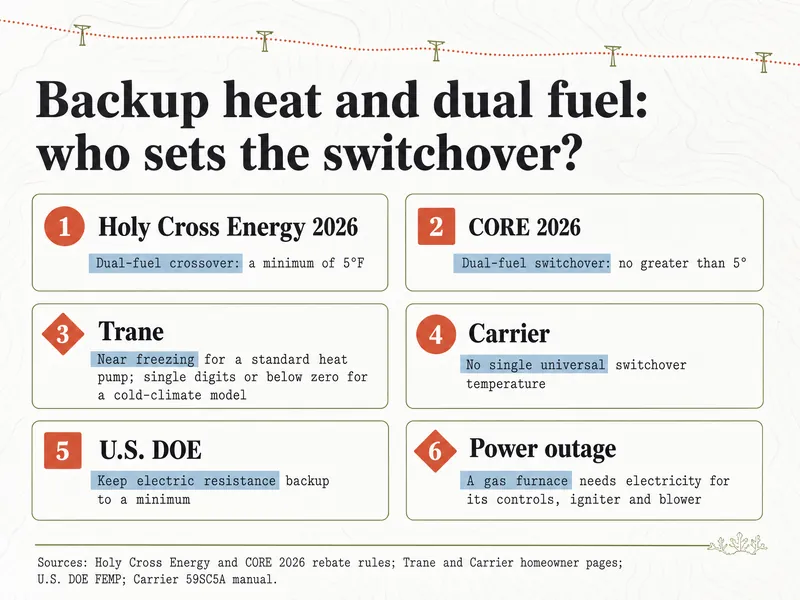
- The U.S. Department of Energy says electric resistance backup is inefficient and its use "should be kept to a minimum" (DOE FEMP).
- Carrier says there is no single universal temperature at which every dual fuel system switches to the furnace.
- Holy Cross Energy's 2026 heat pump rebate sets a dual-fuel crossover of "a minimum of 5°F" and wants the furnace on its own invoice line.
- CORE's 2026 rebate requires a dual-fuel switchover "no greater than 5°" and the heat pump as the primary heat source.
- Garfield County's code design temperature is −2°F up to 7,000 feet and −16°F above it (Garfield County).
- A gas furnace needs household power for its controls, igniter and blower, so neither half of a dual fuel system heats in an outage.
Every heat pump moves less heat as the outdoor air gets colder, while a house loses more. Backup heat covers the gap. In the Roaring Fork Valley the gap is real: the Aspen 1SW weather station, at about 8,175 feet, averages 14 nights a year at or below 0°F in NOAA's 1991–2020 normals, against 6 at Glenwood Springs #2. How the backup is chosen and controlled decides a large share of the winter electric or gas bill.
Why do heat pumps need backup heat here?
Heat pumps need backup heat when their output at the coldest hours falls short of the home's heat loss, or during defrost. The Department of Energy's purchasing notes say resistance elements are added "to make up for deficiencies with the heating capacity," and that cold climates need heat pumps "that can operate at lower ambient temperatures before switching to resistance heating."
Local design temperatures show how cold the target is. Garfield County uses −2°F up to 7,000 feet and −16°F above, and the City of Aspen's code table uses −15°F. A cold-climate heat pump sized from a Manual J calculation may need little backup; an older or undersized one may lean on it every January night. Sizing is covered in heat loss and sizing at elevation.
How does electric backup heat work?
Electric backup heat is a set of resistance coils, often called heat strips, in the air handler that switch on when the heat pump cannot keep up. Resistance heat turns one unit of electricity into one unit of heat, while a heat pump moves several. DOE's Energy Saver booklet says heat pumps can deliver up to three times more heat than the energy they use.
That is why DOE says to keep strip use to a minimum, and why the backup should switch on only when the heat pump cannot hold the set temperature. Strip sizing, wiring and lockout settings are installer work; the panel and air handler carry line voltage. If you are unsure, stop and call a qualified technician.
| Option | How it heats | Where it fits | What the sources say |
|---|---|---|---|
| Electric heat strips | Resistance coils in the air handler | All-electric homes, ducted heat pumps | DOE: keep resistance use to a minimum |
| Gas furnace (dual fuel) | Furnace takes over below a set outdoor temperature | Homes on Black Hills Energy gas | Carrier: no universal switchover temperature |
| Cold-climate heat pump with little backup | Heat pump carries most hours alone | Well-sealed homes sized by Manual J | CORE: heat pump must be the primary heat |
| Existing boiler or stove kept as backup | Separate system heats some rooms | Radiant homes, cabins | Keep both on their own maintenance schedules |
What is a dual fuel heat pump?
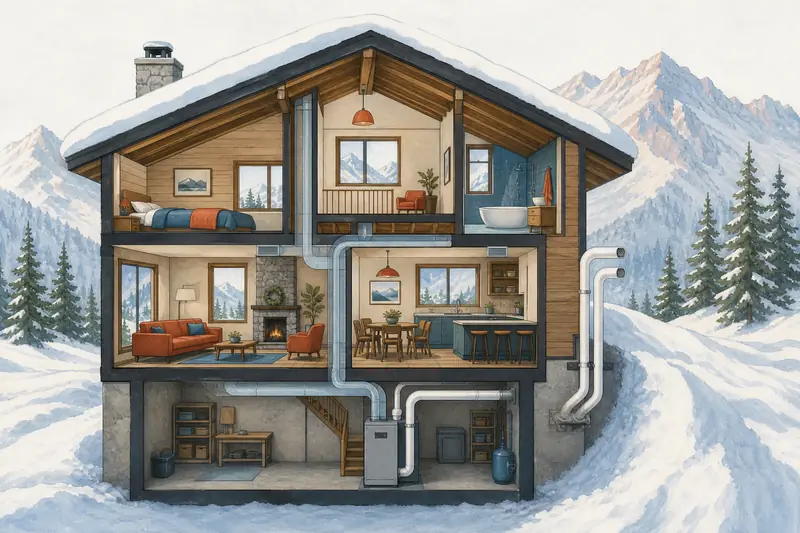
A dual fuel system pairs an electric heat pump with a gas furnace, and the controls choose one or the other based on outdoor temperature. Carrier says the switch happens at a "balance point" that varies with equipment, house, climate and energy costs. Trane says that point could sit around freezing with a standard heat pump but in single digits or below zero with a cold-climate model.
In this valley the furnace half needs high-altitude attention of its own: makers' manuals set gas input and parts for elevation, which is installer work explained in furnace altitude derating. Black Hills Energy's tariff lists all six towns as gas territory, yet not every street has a main, so confirm gas service before planning a dual fuel install.
What switchover temperature do rebate programs require?
The two local rebate programs both use 5°F, but they word it differently, so read each one's own rule. Holy Cross Energy's 2026 residential rebate page (read October 2026) says dual-fuel systems need a crossover temperature of "a minimum of 5°F" and a separate invoice line for the gas or propane furnace. Its 2026 worksheet asks ducted systems to report the switchover temperature.
CORE's 2026 rebates say the switchover must be "no greater than 5°", and that the heat pump must be the primary heat source and rated to heat at −5° or lower. CORE's residential rebates are paused for the rest of 2026 in Garfield County and the Roaring Fork part of unincorporated Eagle County, so check whether your address is still covered. Programs change; check before you buy. Amounts are in utility rebates in the Roaring Fork Valley.
Backup heat by the numbers
- 5°FDual-fuel crossover wording in Holy Cross Energy's 2026 rebate: "a minimum of 5°F"Holy Cross Energy
- −16°FGarfield County winter design temperature above 7,000 feetGarfield County
- 14Nights a year at or below 0°F at Aspen 1SW, 1991–2020 normalNOAA NCEI
- 3xHeat delivered per unit of energy used, at best, by a heat pumpU.S. DOE
How should the thermostat control backup heat?
Use a thermostat built for heat pumps and let it bring on backup only when the heat pump truly falls behind. DOE says heat-pump thermostats that "ramp the temperature up slowly" help avoid triggering the resistance elements, and its Energy Saver booklet says not to set a heat pump back manually if doing so brings on backup electric heat.
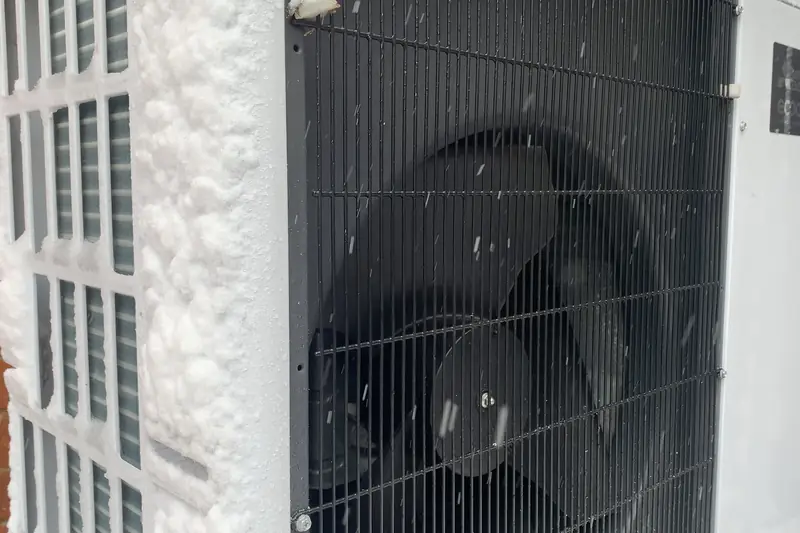
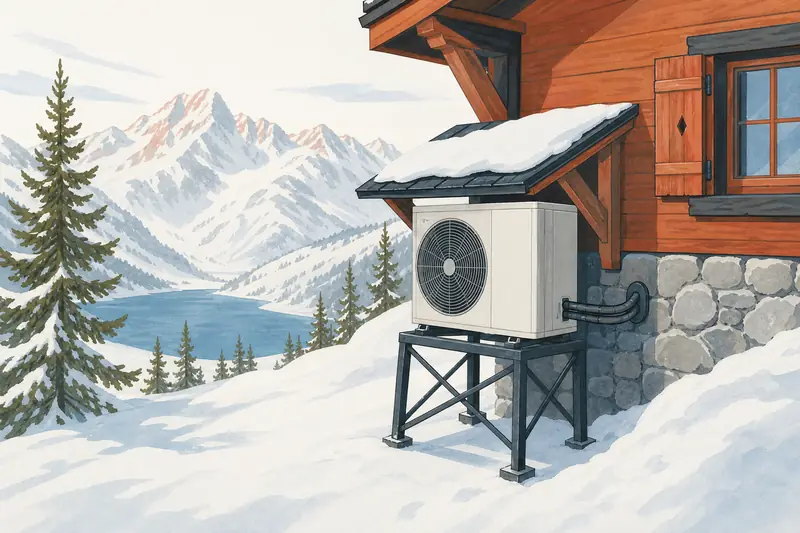
Three habits help. Avoid big manual jumps on a cold morning; small steps let the heat pump catch up on its own. Watch the "aux" or "emergency heat" indicator: emergency heat means strips only, for use when the heat pump has failed. And keep the outdoor unit clear of snow by hand or soft brush so it is not forced into backup by a blocked coil.
Lockout temperatures, staging and dual fuel switch points are set by the installer in the thermostat or control board; line-voltage (120 or 240 volt) baseboard thermostats are electrician work, never an owner swap. PlumbingSupplyAndMore's thermostats (part of Upvalley Heat's ownership group) show the kind of controls involved; on a heat pump with backup, a qualified technician should wire and configure the replacement. Holy Cross pays $50 for a smart thermostat ($100 income-qualified) only in electrically heated homes; Black Hills pays up to $100 where its gas is the main heat.
What happens to backup heat in a power outage?
Both halves stop. A heat pump runs on electricity, and a gas furnace needs household power too: Carrier's 59SC5A manual calls for a 115-volt supply and says a generator must produce smooth sine-wave power for the furnace electronics. Ask a licensed electrician about any generator hookup.
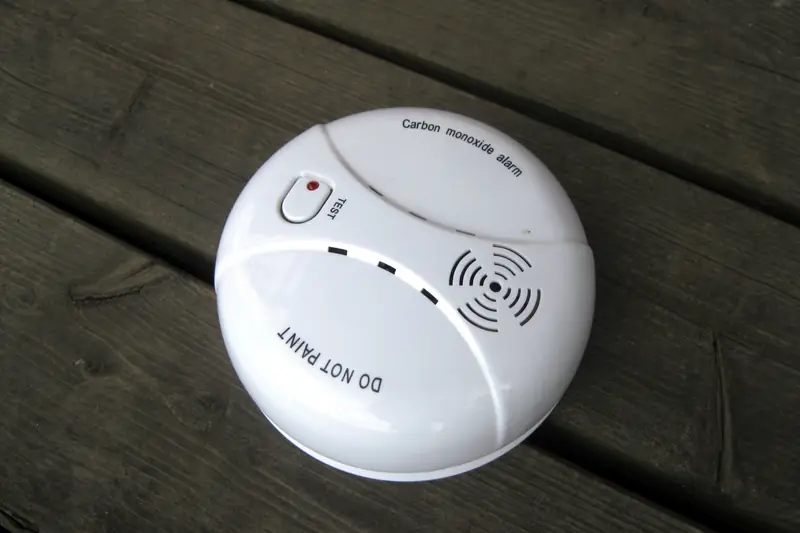
Portable generators belong outside only, never in a garage, basement or crawlspace, at least 20 feet from windows, doors and vents (CDC). Colorado's 2009 alarm law requires a carbon monoxide alarm within 15 feet of the entrance to each sleeping room in the homes it covers; CPSC also advises one on every level. If a CO alarm sounds or anyone feels sick, get everyone out into fresh air first, then call 911. If you smell gas, leave the house and call Black Hills Energy from outside, using its gas safety page; do not touch switches or use a phone indoors. More is in staying warm in a winter power outage.
Avalanche report: how this page was checked
Sources: DOE's Federal Energy Management Program heat pump purchasing page and Energy Saver booklet (2022), Carrier's and Trane's dual fuel pages, Carrier's 59SC5A furnace manual, climate normals (1991–2020) from the Aspen 1SW and Glenwood Springs #2 stations, Garfield County's building code sheet (updated 2023), the City of Aspen's code design table, the 2026 Holy Cross Energy, CORE and Black Hills Energy rebate documents, Colorado's 2009 carbon monoxide alarm law, and CDC and CPSC carbon monoxide pages, all read October 2026. Left out: a recommended switchover temperature for any house (no source gives one), operating-cost comparisons, and strip sizes in kilowatts.
Lift-line questions
What is the difference between auxiliary heat and emergency heat?
Auxiliary heat comes on automatically alongside the heat pump when it cannot keep up. Emergency heat is a manual setting that runs the backup alone, meant for when the heat pump has failed. Leaving emergency heat on by mistake can run up an electric bill quickly.
Is a 5°F switchover right for my dual fuel system?
It is what Holy Cross and CORE write into their 2026 rebate rules, each in its own words. Carrier says the best balance point varies with the equipment, house, climate and fuel prices, so ask the installer to show why a setting suits your system.
Can an existing furnace stay on as backup to a new heat pump?
Often yes, if the furnace and controls are compatible and the furnace is sound. A technician checks the match, sets the switchover and confirms the furnace is set up for your elevation. Holy Cross wants the furnace on its own invoice line for its rebate.
Do I need a special thermostat for a heat pump with backup heat?
DOE recommends thermostats designed for heat pumps, which raise the temperature slowly so the resistance elements stay off. A standard furnace thermostat may not control the backup stage or the outdoor switchover correctly. A qualified technician should match and wire it.
Does a dual fuel system still heat if the power goes out?
No. The heat pump needs electricity, and the gas furnace needs it for controls, igniter and blower. A properly connected generator outdoors, at least 20 feet from openings, or a wood stove are the usual fallbacks.
Should I lower the thermostat at night with a heat pump?
Small setbacks are fine if they do not trigger backup heat on recovery. DOE warns against manual setbacks that bring on electric resistance heat. A heat-pump thermostat with gradual recovery handles this for you.
Where to ski next
Back to the base lodge: heating and cooling notes for the whole valley