Topic · 3 pages
Heating at High Altitude
Heating at high altitude means running gas appliances on less fuel than their sea-level rating and sizing them to a colder design night, because every valley town sits between 5,762 and 8,208 feet.
Written by the Upvalley Heat desk from manuals and official pages · how figures are sourced · Rechecked
First tracks
- The six towns run from 5,762 feet (Glenwood Springs) to 8,208 feet (Snowmass Village), measured by USGS at each town's map point; Aspen's is 7,890 feet.
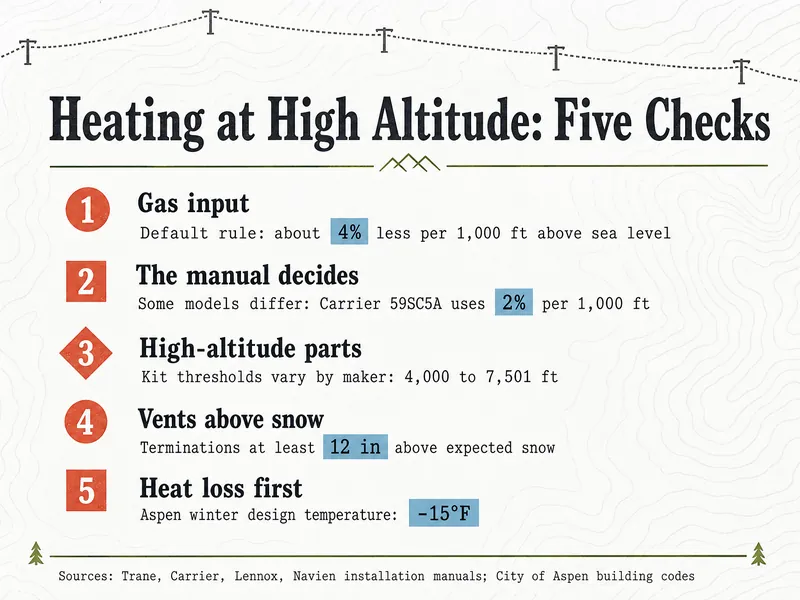
- Gas input is cut about 4% per 1,000 feet above sea level by default once an appliance sits at 2,000 feet or higher, as Trane's furnace manual quotes the National Fuel Gas Code; some models use less.
- Kit thresholds vary by maker, from 4,000 feet (a Trane pressure-switch kit) to 5,400 feet (Navien boilers and tankless heaters) and 7,501 feet (Lennox orifices).
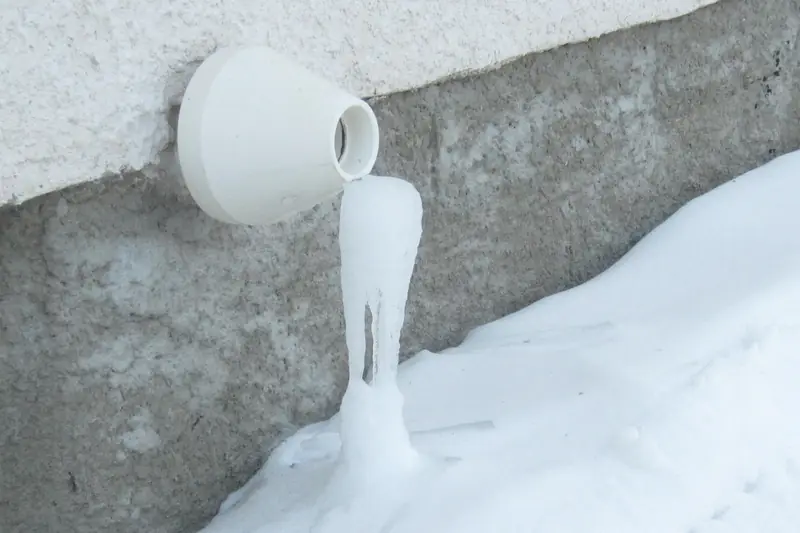
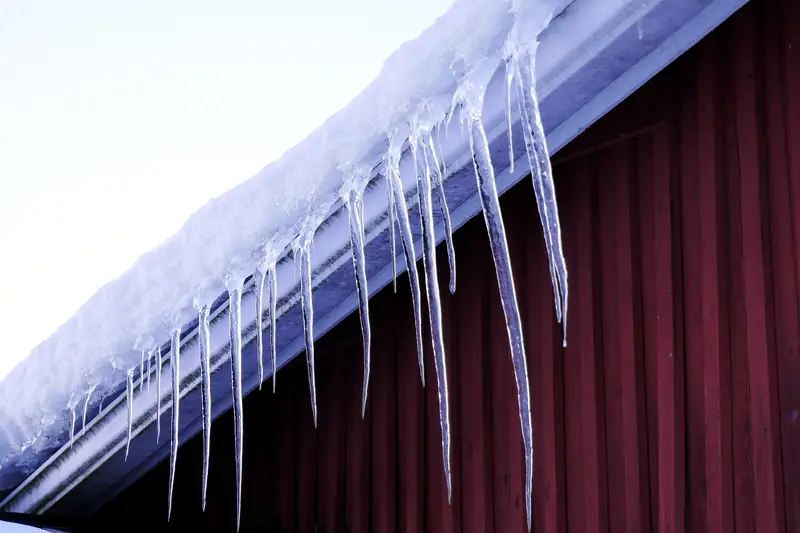
- Makers want vent terminations at least 12 inches above the expected snow level.
- The City of Aspen sets a −15°F winter design temperature, and NOAA's normals put the Aspen 1SW station at 8,880 heating degree days a year.
- Altitude setup is installer-only work in every manual this site opened.
What changes when you heat a home at high altitude?
Three things change at high altitude: gas appliances must burn less fuel per hour, vents and outdoor equipment must clear deep snow, and the house loses heat against a colder design night. All six towns are above the 2,000-foot line where derating starts, so this applies to every furnace, boiler and gas water heater in the valley.
Thin air is the root cause: Trane's kit sheet says a furnace's draft blower cannot build normal pressure up here without a high-altitude kit. Black Hills Energy, whose tariff lists all six towns, even corrects your gas bill for "the local atmospheric pressure" at your meter.
The altitude numbers
- 5,762–8,208 ftUSGS elevation range of the six towns' map pointsUSGS 3DEP
- 4%Default gas input cut per 1,000 ft, from 2,000 ftTrane S9V2 installer's manual (2020)
- 12 inVent termination above expected snowCarrier 59SC5A manual (2019)
- −15°FCity of Aspen winter design temperatureCity of Aspen building codes
How is a furnace set up for altitude?
A furnace is set up for altitude by reducing its gas input with the method in its own manual, which can mean new burner pressure, new orifices or a new pressure switch. Trane and Weil-McLain print the 4% per 1,000 feet default, while Carrier's 59SC5A uses 2%; Lennox's EL297 changes its pressure switch from 4,501 feet and its orifices from 7,501 feet.
Under the 4% default, the cut would be roughly 23% in Glenwood Springs and 33% in Snowmass Village, which is why the model's manual and a technician's measurements, not a rule of thumb, settle it.
What about boilers and water heaters at altitude?
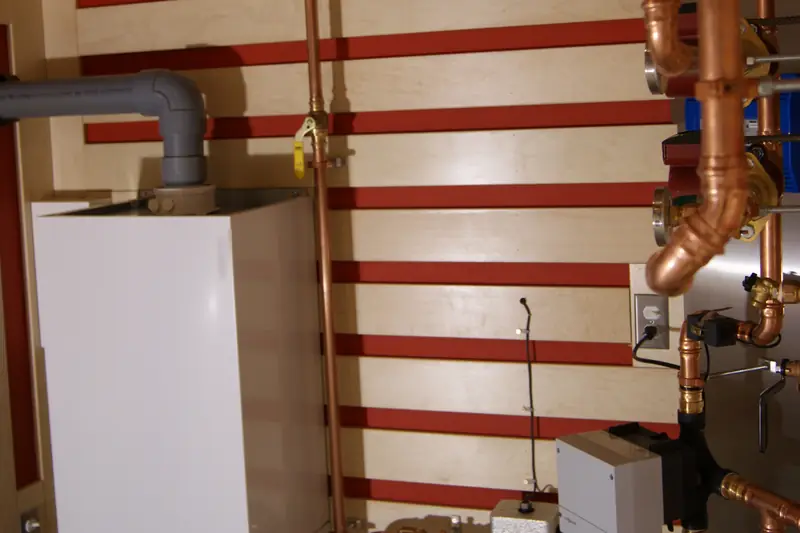
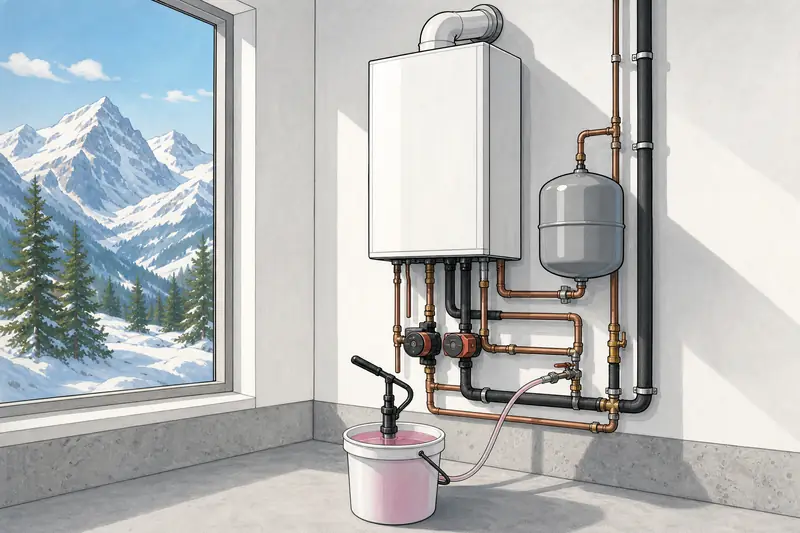
Boilers and gas water heaters are derated too, by kit, control setting or a factory high-altitude model. Navien requires its high-altitude kit above 5,400 feet on the NHB-H boiler and NPE-2 tankless heater, Weil-McLain sets its AquaBalance combi by altitude band to 10,000 feet, and Lochinvar's Knight manual rates standard boilers to 4,500 feet only.
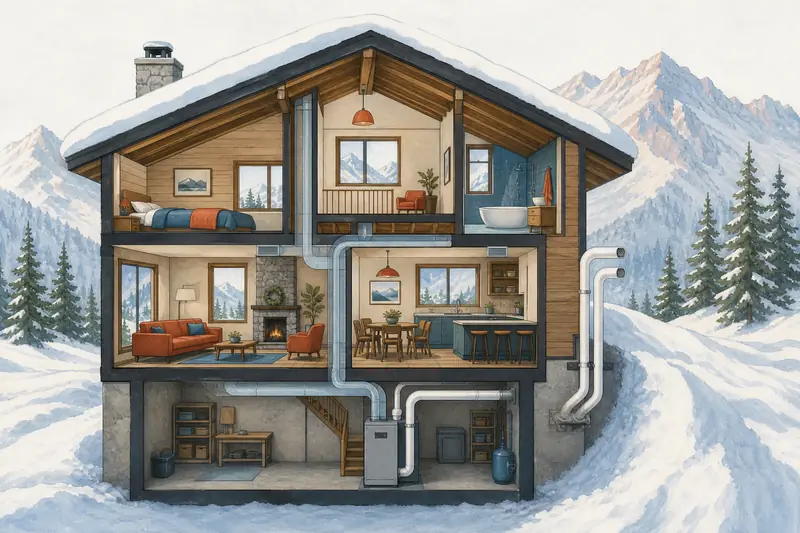
Vents matter as much as burners. Lochinvar wants the air inlet at least 12 inches above grade or the snow line, and Black Hills Energy asks customers to keep exhaust and intake areas clear.
How much heat does a high-altitude home need?
A high-altitude home needs as much heat as a room-by-room calculation says it loses on a design-cold night, and here that night is cold. Aspen designs for −15°F, and Garfield County's commercial code sheet uses −2°F below 7,000 feet and −16°F higher up.
Season totals rise up-valley as well. The Aspen 1SW station records about 8,880 heating degree days a year against 6,723 at Glenwood Springs #2, per NOAA. Size equipment to the calculated load and compare it with a gas appliance's altitude-adjusted output, not its plate.
| Appliance | What changes up here | Where the number comes from |
|---|---|---|
| Gas furnace | Input cut; possible orifice, pressure and switch changes | The model's installation manual |
| Gas boiler | Input cut by kit, control setting or factory model | The model's installation manual |
| Gas tankless water heater | Kit and altitude menu setting above 5,400 ft (Navien) | The model's conversion instructions |
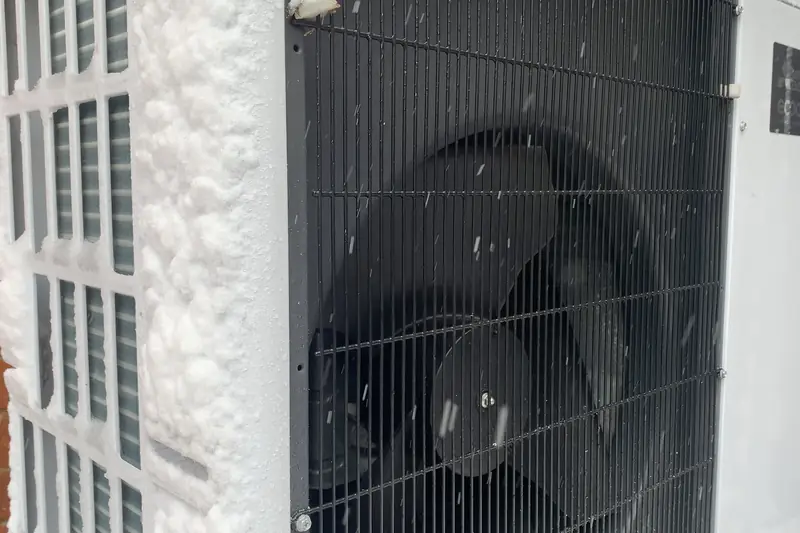
| Heat pump | Thinner air carries less heat; ask how the maker handles altitude | The maker's data for that model |
| Any heating system | Sized to a colder design temperature | Town or county building department |
Who should do high-altitude setup work?
High-altitude setup is work for a qualified, licensed technician, every time. Lennox says installation and service "must be performed by a licensed professional HVAC installer or equivalent, service agency, or the gas supplier," and Navien warns that a missing kit or wrong setting "could cause carbon monoxide poisoning."
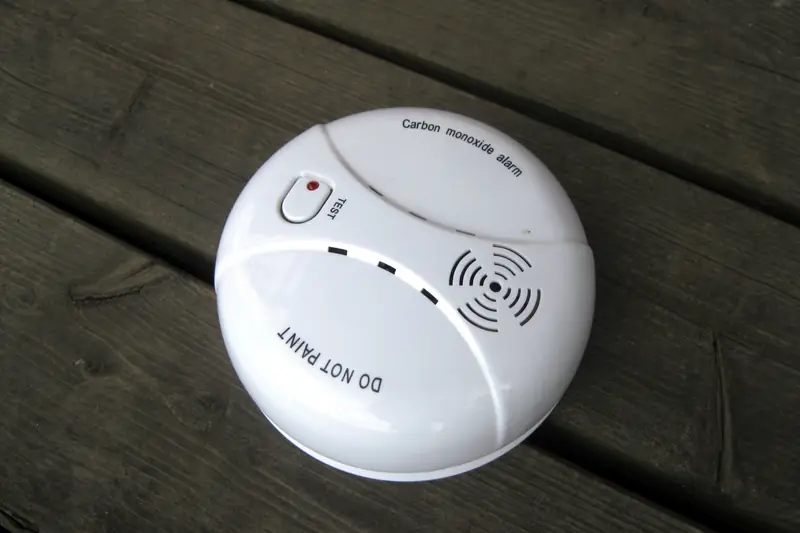
That is why a CO alarm matters in every home with gas. Colorado's 2009 law calls for one within 15 feet of each bedroom door when a fuel-burning home is sold or gets permitted work; the CPSC suggests one per level. If it sounds or people feel unwell, go outside to fresh air and then dial 911; for a gas odor, leave the house and call Black Hills Energy from outdoors. Your share of the work is clearing vents by hand after storms and booking the yearly service; if you are near the equipment and unsure, stop and call a qualified technician.
Avalanche report: how this page was checked
This hub draws on the same documents as its three pages, all read October 2026: USGS ground elevations for the six towns; installation manuals from Trane (2020 and 2024), Carrier (2019), Lennox (2026), Weil-McLain (2017), Navien and Lochinvar (2010); Black Hills Energy's Colorado gas tariff and safety pages; NOAA NCEI 1991–2020 normals; City of Aspen and Garfield County design values; and Colorado's 2009 carbon monoxide alarm law. Left out: ASHRAE design temperatures, the National Fuel Gas Code text itself, a heat-content figure for the gas Black Hills delivers, and altitude derate percentages for home heat pumps, none of which could be confirmed from a primary source.
Lift-line questions
At what elevation does altitude derating start?
The default rule makers quote starts at 2,000 feet above sea level. Every Roaring Fork Valley town is well above that, with Glenwood Springs lowest at 5,762 feet at its USGS map point. Kit thresholds are higher and vary by maker.
Is there one altitude rule for the whole valley?
No. Makers set different thresholds and percentages, from Trane's 4,000-foot pressure-switch kit to Navien's 5,400-foot kit and Lennox's 7,501-foot orifice change. What holds valley-wide: each town is higher than the elevation at which the majority of makers want altitude kits or settings.
Do electric heat pumps need altitude derating?
They are not derated like gas burners, but thinner air carries less heat across the outdoor coil, and makers handle that in their own data. This site found no residential derate figures from a maker, so ask the contractor how the chosen model's maker treats altitude.
Why is Aspen's elevation sometimes given as a different number?
Signs and websites quote various figures. This site uses the USGS ground elevation at each town's map point, which is 7,890 feet for Aspen, so that all six towns are measured the same way.
Does Glenwood Springs need less altitude work than Aspen?
The work is the same kind, but the numbers differ: under the 4% default, the input cut would be about 23% at Glenwood's 5,762 feet against about 32% at Aspen's 7,890 feet. Glenwood is also above most makers' kit thresholds, so altitude setup applies in both towns.
Can a homeowner check whether altitude setup was done?
Not from the rating plate, which shows sea-level input. Ask the installer for the start-up record: measured input, pressures or combustion readings, and any kit part numbers.
Back to the base lodge: heating and cooling notes for the whole valley