Topic · 4 pages
Heat Pumps in the Roaring Fork Valley
Heat pumps in the Roaring Fork Valley can carry most of a winter if they are cold-climate models, sized by a load calculation and raised above the snow, with backup heat planned for the coldest nights.
Written by the Upvalley Heat desk from manuals and official pages · how figures are sourced · Rechecked
First tracks
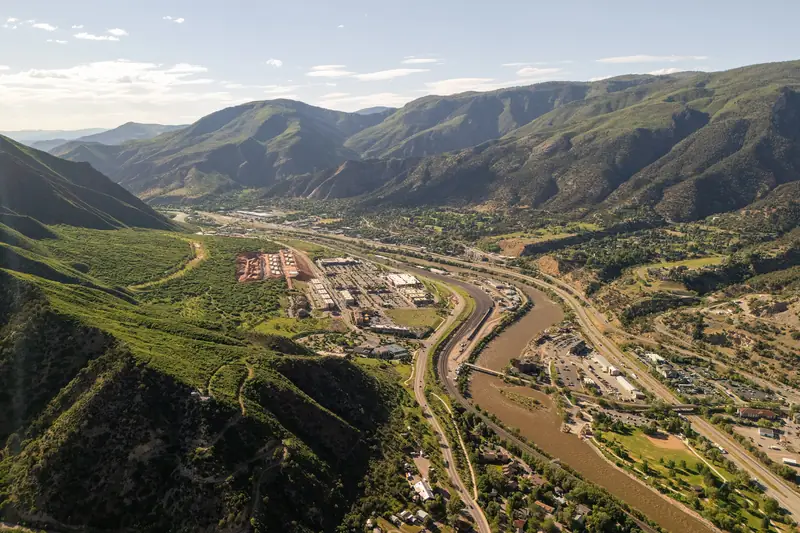
- Town elevations climb from 5,762 feet in Glenwood Springs to 8,208 feet in Snowmass Village, as USGS measures them at each town's GNIS point.
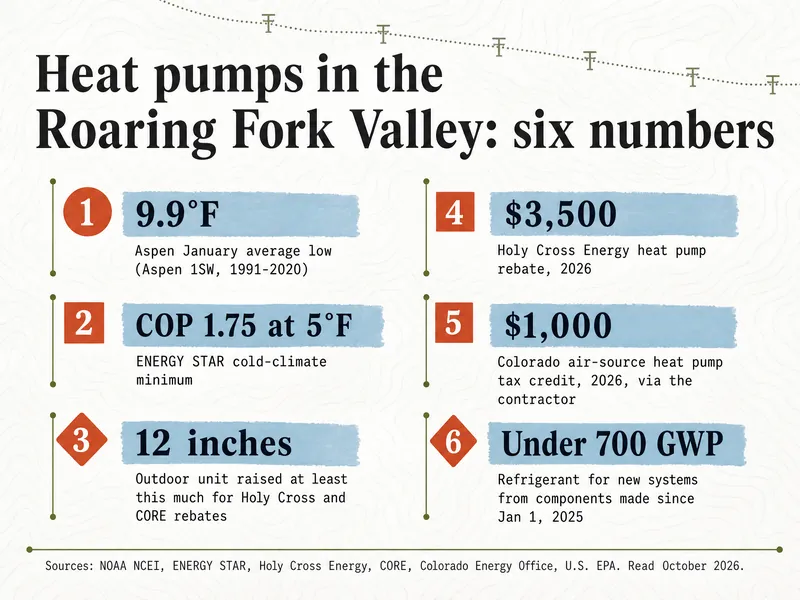
- At the Aspen 1SW station, NOAA's 1991–2020 normals show a 9.9°F average January low and roughly 8,880 heating degree days.
- ENERGY STAR labels a heat pump cold-climate when its COP at 5°F is 1.75 or higher and it keeps 70% of its 47°F capacity at 5°F (ENERGY STAR).
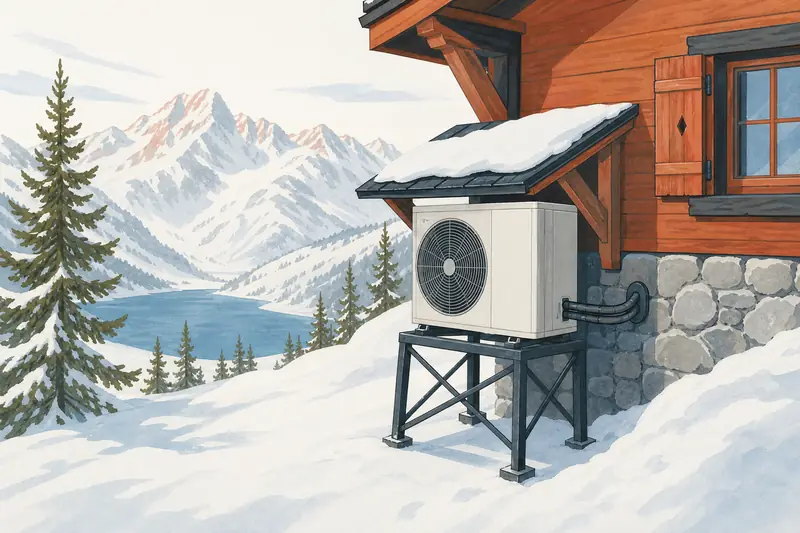
- Holy Cross Energy pays $3,500 per heat pump project in 2026 ($7,000 income-qualified) for cold-climate units raised at least 12 inches.
- Colorado's heat pump tax credit is $1,000 for air-source systems installed in 2026, claimed by the contractor (Colorado Energy Office).
- New systems built from parts made since January 1, 2025 must use refrigerant under 700 GWP.
Heat pumps move heat instead of burning fuel, and the newer cold-climate models keep working far colder than the units many valley owners remember. The notes in this folder cover what changes at altitude and in deep snow, how local rebates define a qualifying system, and which federal rules shifted in 2025 and 2026.
Do heat pumps work in Roaring Fork Valley winters?
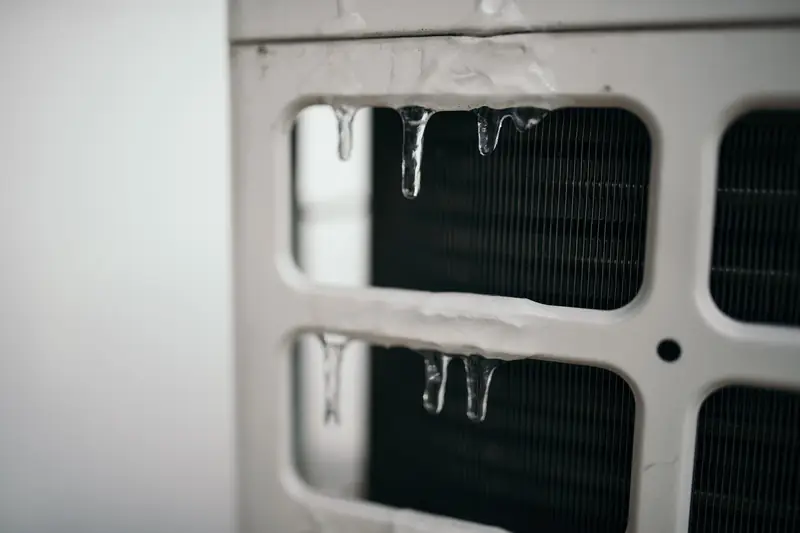
Cold-climate heat pumps do, when they are sized for the house and backed up for the coldest hours. The Aspen 1SW station, at about 8,175 feet, averages 14 nights a year at or below 0°F in NOAA's normals, while Glenwood Springs #2 averages 6, so up-valley homes ask more of the equipment.
Makers publish the proof model by model. Mitsubishi rates one 12,000 Btu/h outdoor unit to hold its rated heat down to −5°F, and Bosch says its ducted IDS Ultra gives full capacity at 5°F and runs to −13°F (Bosch specification, 2026). A load calculation compares that output with your home's heat loss; see heat loss and sizing at elevation.
| Setup | Best fit | Key local rule |
|---|---|---|
| Ducted cold-climate heat pump | Homes with sound ductwork | Holy Cross: HSPF2 9 or more |
| Ductless mini-split | Cabins, additions, rooms without ducts | Holy Cross: HSPF2 10 or more |
| Dual fuel (heat pump plus gas furnace) | Homes on Black Hills Energy gas | Holy Cross: crossover "a minimum of 5°F"; CORE: "no greater than 5°" |
| Heat pump with electric strips | All-electric homes | DOE: keep resistance heat to a minimum |
What makes a heat pump cold-climate?
A cold-climate heat pump is one certified to keep a COP of at least 1.75 at 5°F. ENERGY STAR adds that 5°F capacity must be at least 70% of 47°F capacity; NEEP's version 4.0 specification sets the same 5°F COP at maximum capacity but has no capacity-ratio rule. Holy Cross asks for a cold-climate unit and HSPF2 thresholds, not a NEEP listing.
When does a mini-split make sense?
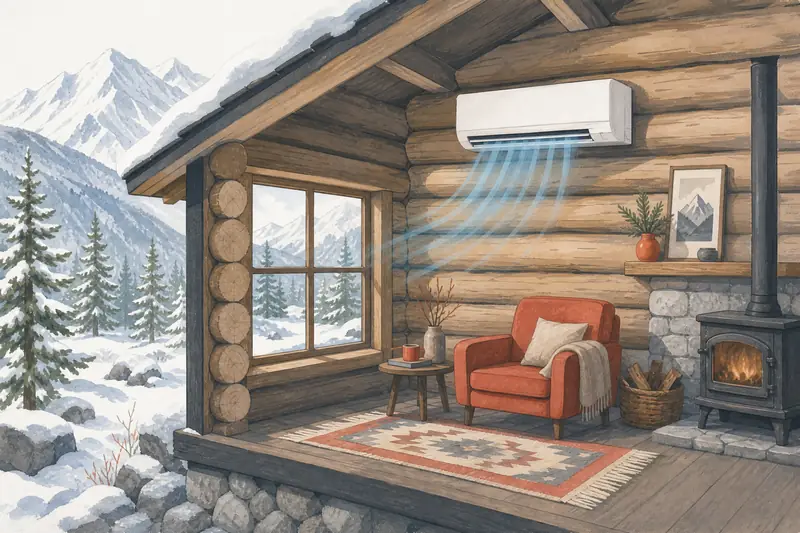
A mini-split makes sense where there are no ducts or one area needs its own heat and cooling. Ductless units that meet NEEP's cold-climate spec reach at least 8.5 HSPF2 and 15 SEER2, and Holy Cross Energy's 2026 residential rebate page (read October 2026) asks ductless systems for HSPF2 of 10. Colorado's tax credit also wants the system designed to meet at least 80% of annual heating needs, which one small head in a big house may not.
What backup heat do heat pumps need here?
Most valley systems keep some backup, electric strips or a gas furnace, for the coldest nights. DOE's heat pump purchasing notes say resistance heat should be kept to a minimum. Holy Cross and CORE each set a 5°F dual-fuel switchover rule in their own words for 2026 rebates. Programs change; check before you buy.
Which heat pump rules changed in 2025 and 2026?
Three changed: refrigerant, federal credits and the R-410A installation deadline. Any home system with a component made on or after January 1, 2025 must run on a refrigerant below 700 GWP, and an EPA rule effective July 27, 2026 lets systems built only from pre-2025 parts still be installed (EPA). The federal 25C credit is not allowed for property placed in service after December 31, 2025 (IRS), while Colorado's own credit continues.
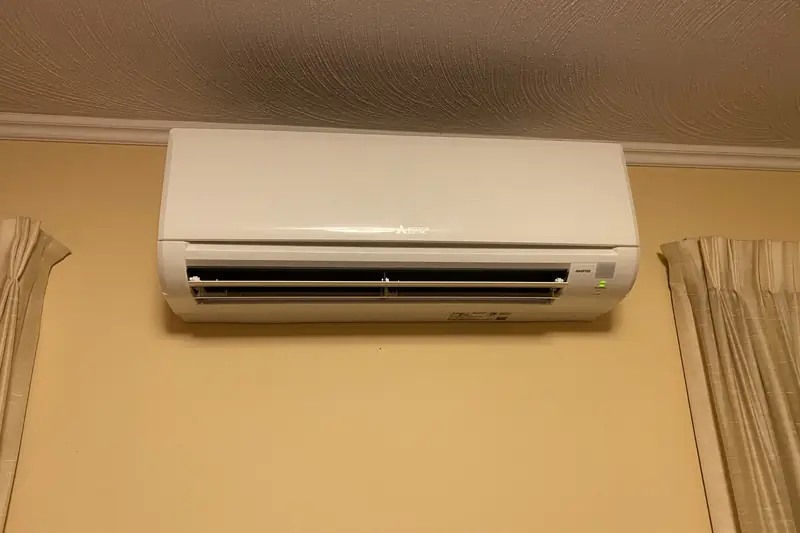 Heat pumps: Heat pump refrigerant and efficiency rules
 Rebates and rules: Heating tax credits in 2026
The folder in four numbers
- 8,880Heating degree days a year at Aspen 1SW, 1991–2020NOAA NCEI
- 1.75COP at 5°F needed for an ENERGY STAR cold-climate heat pumpENERGY STAR
- $3,500Per-project heat pump rebate from Holy Cross Energy in 2026Holy Cross Energy
- $1,000Colorado air-source heat pump tax credit, 2026 installsColorado Energy Office
Avalanche report: how this page was checked
This folder draws on USGS elevation data, NOAA NCEI 1991–2020 normals, ENERGY STAR and NEEP cold-climate criteria, Mitsubishi and Bosch specification sheets, DOE heat pump pages, EPA's HFC rules, the IRS and Colorado Energy Office credit pages, and the rebate pages Holy Cross Energy and CORE posted for 2026; everything was read in October 2026. Prices, brand rankings and altitude derates for home heat pumps are left out because no primary source gave them.
Lift-line questions
Is the valley too cold for a heat pump?
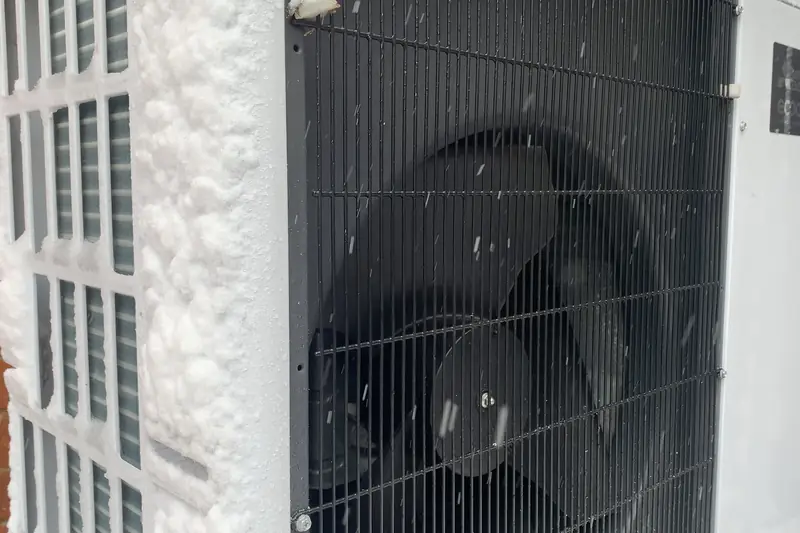
Not for cold-climate models sized to the house. Mitsubishi, Bosch and Fujitsu list models that keep heating down to −13°F or −15°F, and the Aspen 1SW January average low is 9.9°F. Most systems still keep backup heat for the coldest nights and defrost.
Does altitude reduce heat pump output?
Thinner air carries less heat, and a Trane commercial catalog says lower air density reduces condenser capacity. No residential maker figure was found, so ask the installer how the quoted model's maker handles your elevation.
Who pays for heat pumps in Glenwood Springs versus Aspen?
It depends on your electric utility and address. Holy Cross Energy serves much of the valley; the City of Aspen and the City of Glenwood Springs run their own electric utilities in parts of those towns. Check your bill, then the matching rebate page.
Can a second home get heat pump rebates?
Utility rebates follow the account rules; Holy Cross, for example, requires the equipment in its territory and enrollment in Peak Time Payback. The state's HEAR rebates excluded second homes and closed to single-family homes on August 1, 2026.
Do heat pumps need a permit in the valley?
The City of Aspen and the City of Glenwood Springs both list a mechanical permit for heating replacements, and Pitkin County, Basalt and Carbondale post mechanical permit forms. Plan on a permit and check with the local building department.
Is a heat pump still worth it without the federal credit?
That depends on the house, fuel prices and local rebates; this site does not compare costs. What changed is that 25C and 25D ended after 2025, while Colorado's credit and 2026 utility rebates continue.
Back to the base lodge: heating and cooling notes for the whole valley