Topic · 3 pages
Cold Snaps: Pipes, Outages, No Heat
Cold snaps in the Roaring Fork Valley test three things at once: water pipes, the power that runs your furnace, and the furnace itself; keep the heat at 55°F or more and know the safe checks.
Written by the Upvalley Heat desk from manuals and official pages · how figures are sourced · Rechecked
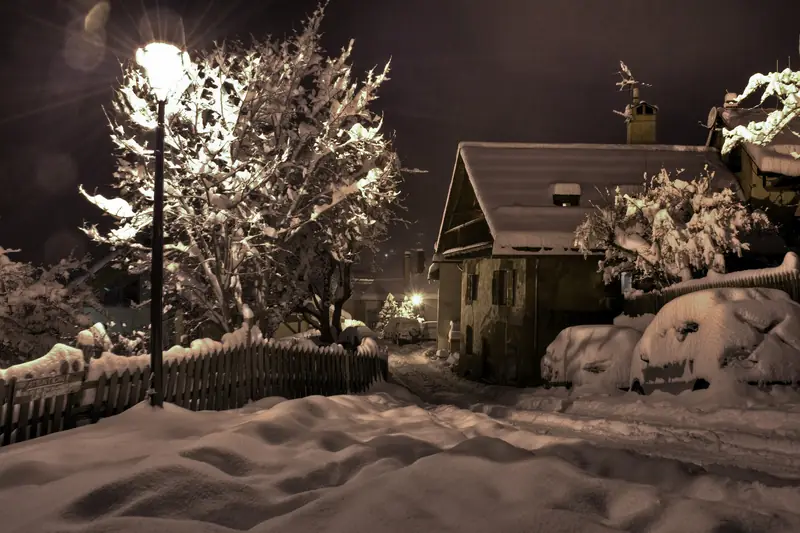
First tracks
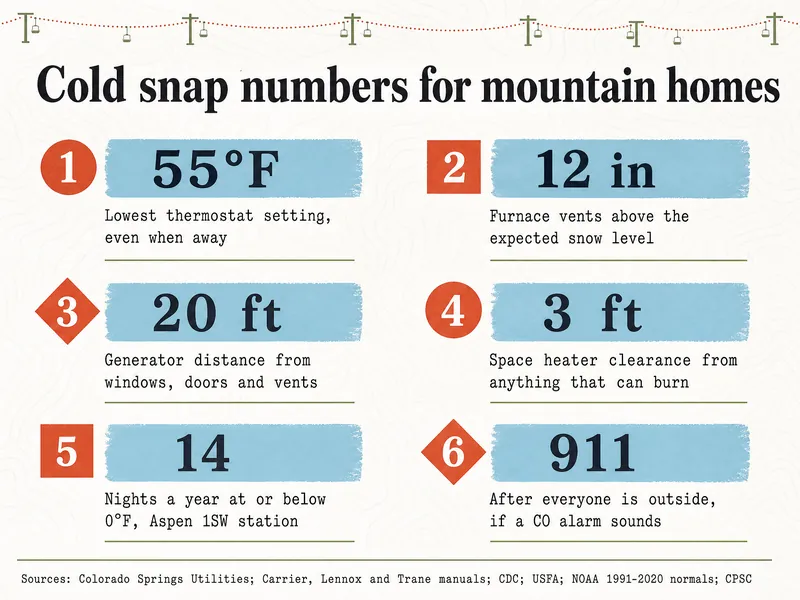
- NOAA's 1991–2020 normals give the Aspen 1SW station about 8,880 heating degree days and 14 nights a year that reach 0°F or colder.
- Never let an empty house drop below 55°F, says Colorado Springs Utilities.
- Gas furnaces need 115-volt power for their controls and igniter, per Carrier's 59SC5A manual, so an outage stops the heat.
- Run generators outdoors only, at least 20 feet from windows, doors and vents (CDC).
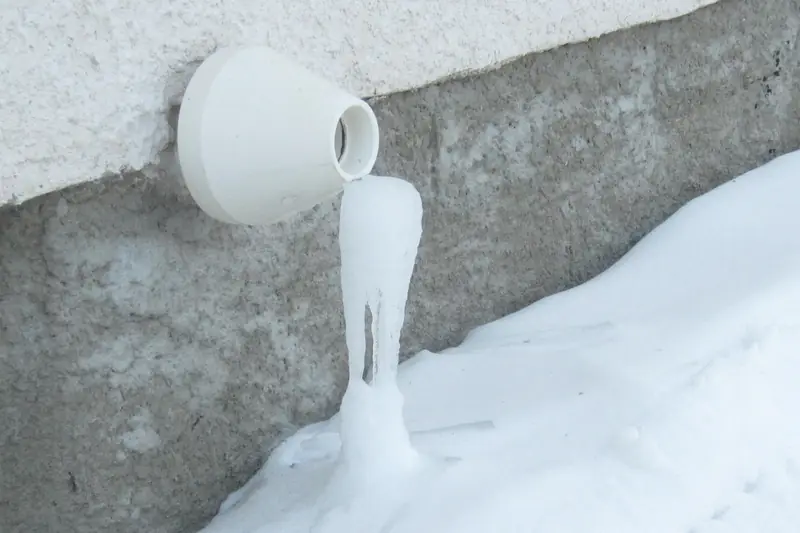
- Furnace makers set plastic vent ends 12 inches or more over the snow they expect; a buried vent can shut the furnace down.
- If a carbon monoxide alarm sounds, get everyone outside, then call 911 (CPSC).
What fails first in a cold snap?
In a cold snap the weak points are usually water lines in cold spots, buried furnace vents and the electricity a furnace needs, before the furnace itself. Up here the cold is long: NOAA's 1991–2020 normals for Aspen 1SW count about 8,880 heating degree days a year, a January average low of 9.9°F and about 171 inches of snow (a provisional normal). Glenwood Springs #2 sees about 6,723 heating degree days and around 6 sub-zero nights.
Snow and outages tend to arrive together. A storm that drifts over the plastic vent pipes of a high-efficiency furnace can also bring down lines, and an empty house kept too cold invites frozen pipes. The pages below take each failure in turn.
Cold-snap figures
- 8,880Heating degree days a year, Aspen 1SW (1991–2020)NOAA NCEI
- 14Nights a year at or below 0°F, Aspen 1SWNOAA NCEI
- 55°FLowest safe thermostat setting for an empty houseColorado Springs Utilities
- 20 ftGenerator distance from windows, doors and ventsCDC
How do you keep pipes from freezing?
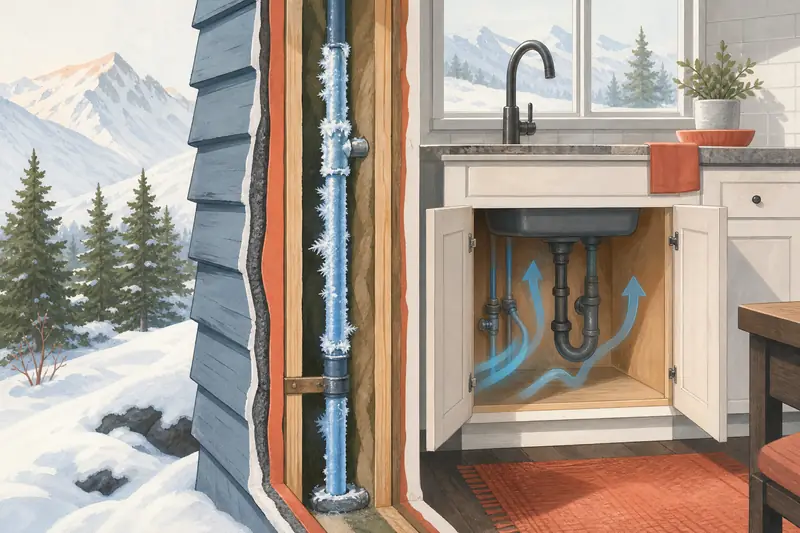
Keep pipes from freezing by holding the heat at 55°F or more, opening sink cabinets on outside walls on bitter nights, and letting a pencil-thin stream of cold water run. When a pipe does freeze, warm it slowly with a hair dryer or warm towels from the faucet end; Arlington County warns never to use a torch or open flame.
The condensate drain of a high-efficiency furnace can freeze too, and Carrier requires a freeze protection kit wherever the furnace area may fall below 32°F; a technician fits it.
How do you stay warm in a winter power outage?
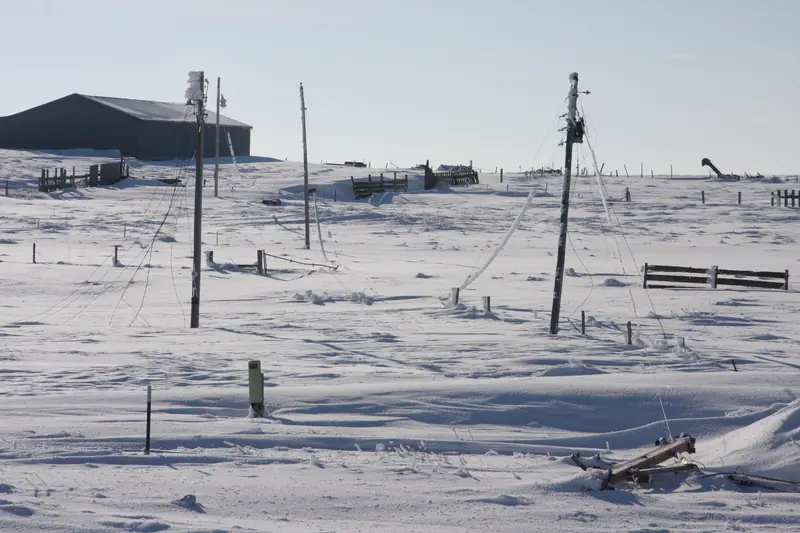
Stay warm in an outage with layers, one shared room and only heat that is safe indoors, because most gas furnaces and boilers stop without electricity. Ready.gov says never to heat a home with a gas oven or stovetop, and the U.S. Fire Administration says to keep anything that can burn 3 feet from a space heater.
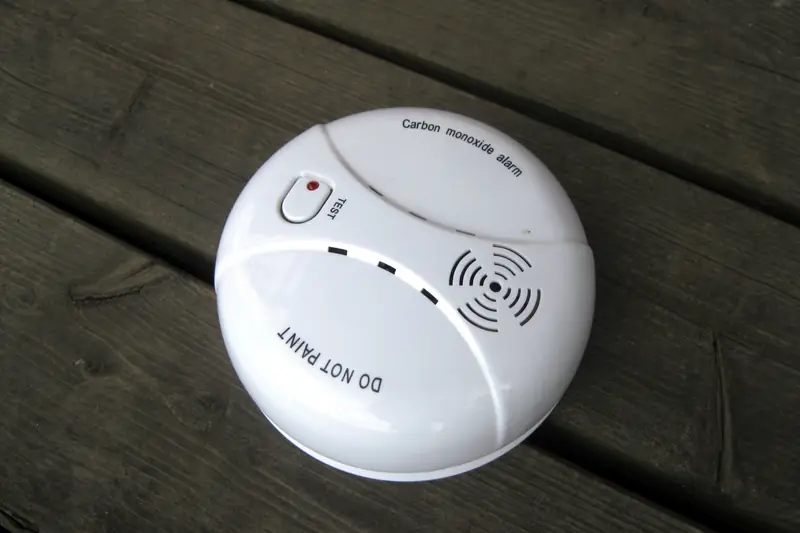
Generators belong outside, at least 20 feet from openings, never in a garage, basement or crawlspace. Carbon monoxide alarms with battery backup keep watch while the power is off.
 Cold snaps: Staying warm in a winter power outage
 Indoor air: Carbon monoxide safety in Colorado homes
What can you safely check when the heat stops?
When the heat stops, a homeowner can safely check five things: the thermostat, the breaker and furnace service switch, the air filter, the furnace's front panel and the outside vent pipes. Carrier's 59SC5A manual limits untrained people to basic tasks such as filter changes and leaves "all other operations" to trained service personnel.
| Problem | Safe owner step | Leave to a professional |
|---|---|---|
| Frozen supply pipe | Gentle heat from the faucet end; main shutoff if it splits | Pipes inside walls: licensed plumber |
| Snow over furnace vents | Clear by hand or soft brush | Repeated icing or lockouts: technician |
| Power outage | Generator outdoors, 20 feet away | Connecting a generator to the house: licensed electrician |
| Furnace will not start | Thermostat, breaker, switch, filter, panel | Gas valves, burners, igniters, safety switches |
| Gas smell | Leave, then call from outside | Black Hills Energy and 911 |
When is it time to call a heating technician?
Bring in a technician when those five checks change nothing, or right away if a breaker trips twice, water pools at the furnace, or the exhaust keeps icing. A gas smell is different: get out of the house, then phone Black Hills Energy and 911 from outside; never switch lights or use phones in the house.
Replacing a furnace or boiler is permit work in Aspen and Glenwood Springs, and every town in the valley sits above the point where most makers call for high-altitude parts or settings. The furnace altitude derating page explains what the installer adjusts, and Colorado's LEAP program can help with heating bills from November 1, 2026.
Avalanche report: how this page was checked
This hub draws on the NOAA NCEI 1991–2020 normals for Aspen 1SW and Glenwood Springs #2; Colorado Springs Utilities' and Arlington County's frozen pipe pages; the CDC carbon monoxide page, CPSC's carbon monoxide center, ready.gov's power outage page and the U.S. Fire Administration's heating page; the Carrier 59SC5A, Lennox EL297 and Trane S9V2 furnace manuals; and Black Hills Energy's gas safety page, all read October 2026. Each linked page lists its own sources. Left out: any figure for how long a house stays warm without heat, which no source gives.
Lift-line questions
What is the first thing to do when a cold snap is forecast?
Check that the furnace vents outside are clear, CO alarm batteries are fresh and the thermostat holds at least 55°F. Find the main water shutoff before you need it.
Is a cold snap worse in Aspen than in Glenwood Springs?
By NOAA's 1991–2020 normals, yes: Aspen 1SW averages about 14 sub-zero nights a year against roughly 6 at Glenwood Springs #2.
Does a high-efficiency furnace handle deep snow?
Only if its vents stay clear. Makers mount the vent ends at least a foot above expected snow, and a drift over them can stop the furnace.
Can a gas furnace run during a power outage?
Not without power. Its controls, igniter and blower all need household electricity.
Who checks an empty second home after a storm?
Arrange a neighbor or a caretaker to check the vents, the thermostat and the water once the storm passes.
Where can you get help paying for heat?
Colorado's LEAP program takes applications from November 1 through April 30 and usually pays $200 to $1,000 a season.
Back to the base lodge: heating and cooling notes for the whole valley