No Heat? Safe Checks Before You Call
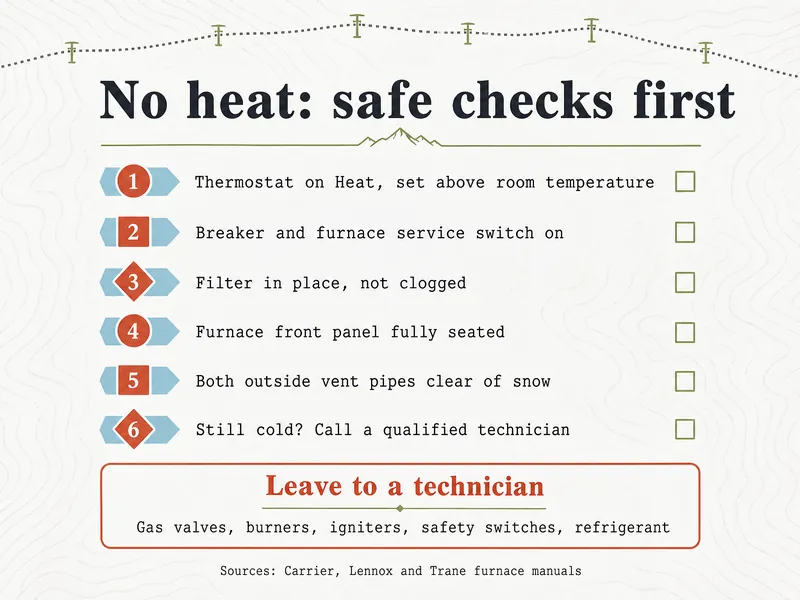
No heat? Check the thermostat, the breaker and furnace switch, the filter, the furnace door and the outside vent pipes; anything beyond those five belongs to a qualified technician.
Written by the Upvalley Heat desk from manuals and official pages · how figures are sourced · Rechecked
Ownership note: Upvalley Heat belongs to the same ownership group as PlumbingSupplyAndMore, Central Plumbing & HVAC, SoftPro Water Systems and Quality Water Treatment, the businesses this page links to. Figures here come from federal, Colorado, county and utility pages and from manufacturers' installation manuals, read in October 2026. What a store says about its own products is the store's claim, not a finding of this site. How partner links work here
First tracks
- Carrier's 59SC5A manual says untrained people may clean and replace air filters, and "all other operations must be performed by trained service personnel."
- A blower door switch cuts 115-volt power to the controls when the panel is off; Carrier says "no component operation can occur" and never to bypass it.
- Carrier, Lennox and Trane all put condensing-furnace vent ends 12 inches or more above where snow is expected to reach; a drift over them can stop the furnace.
- Lennox says to move the gas control by hand only, never with tools, and if it will not move, not to force it.
- If you smell gas, leave first and call Black Hills Energy and 911 from about 300 feet away.
- Aspen and Glenwood Springs require a mechanical permit to replace a furnace or boiler, so a replacement starts with a licensed contractor.
What should you check first when there is no heat?
Check the thermostat first: it should be set to Heat, set a few degrees above the room temperature, and showing a lit display. If the screen is blank, replace its batteries if it uses them.
Next, confirm that power reaches the furnace. Look for a tripped breaker in the panel and reset it once; if it trips again, leave it off and call a technician. Then find the furnace's service switch, often on or near the furnace, and make sure it is on. Carrier's installation manual warns that "there may be more than one disconnect switch", so check every one.
If the thermostat is the problem and its manual allows an owner swap (never a 120- or 240-volt baseboard thermostat, which is electrician work; turn the breaker off first, and if unsure call a qualified technician), PlumbingSupplyAndMore's thermostats (part of Upvalley Heat's ownership group) show the kinds sold; a heat pump or multi-stage system is safer left to a technician. Black Hills Energy's 2026 rebate form lists up to $100 for a smart thermostat, with applications due January 31, 2027 (see utility rebates).
Numbers on the checklist
- 12 inMinimum vent clearance over predicted snow depthCarrier, Lennox and Trane manuals
- $200–$1,000Usual LEAP heating benefit per seasonColorado CDHS
- 300 ftDistance to walk before calling about a gas smellBlack Hills Energy
Which no heat checks are safe for a homeowner?
The safe no-heat checks are the ones that need no tools and open nothing: the thermostat, the breaker and service switch, the air filter, the furnace door, the registers, and snow around the outside vents and any outdoor heat pump unit. Carrier draws the line plainly: untrained people "can perform basic maintenance functions such as cleaning and replacing air filters."
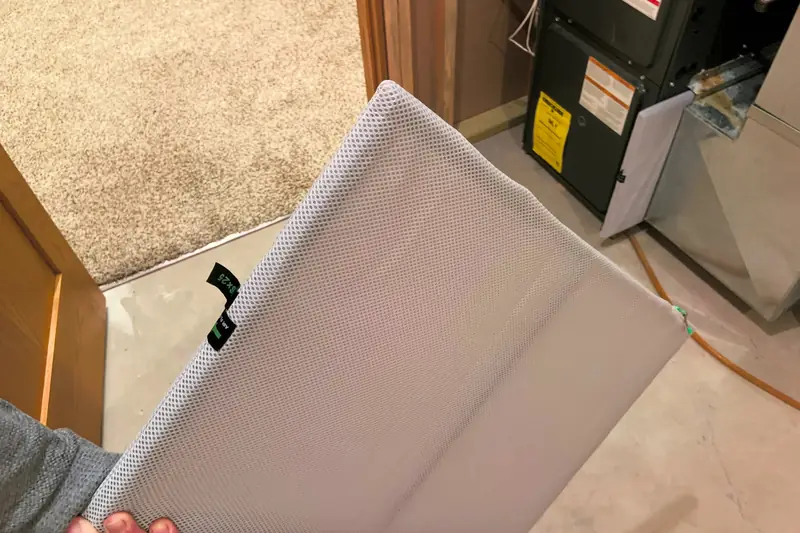
A clogged filter can starve the furnace of air. Carrier says to check the filter each month, never to run the furnace without one, and to point any airflow arrow toward the blower. Lennox says a filter must be in place whenever the unit runs. For filter types and sizes, see wildfire smoke filtration.
The furnace's front panel matters too. Carrier's blower door switch "opens 115-v power to control", so a panel left loose after a filter change can stop everything. Seat the panel firmly; never tape or hold the switch closed.
| Item | Homeowner | Technician only |
|---|---|---|
| Thermostat | Mode, setpoint, batteries | Wiring and multi-stage setup |
| Breaker and service switch | Reset a tripped breaker once; switch on | Repeated trips, wiring faults |
| Air filter | Check monthly, replace if clogged | Blower and duct problems |
| Furnace front panel | Seat it fully so the door switch closes | Any work behind the panel |
| Outside vent pipes | Clear snow by hand or soft brush | Icing, venting faults, lockouts |
| Condensate drain | Report water or ice | Clean, prime and protect the trap |
How do snow-blocked vents shut a furnace down?
A high-efficiency furnace pulls combustion air in through one plastic pipe and pushes exhaust out through another, and if snow packs either one, the furnace's safety controls stop it. That is why Carrier, Lennox and Trane call for vent ends to sit 12 inches or more over the deepest snow anticipated.
After a storm, walk outside and check both pipes. The National Weather Service says to make sure a gas furnace vent is not blocked by a drift as soon as it is safe to go out, and Black Hills Energy says to keep exhaust and air intake areas clear. Clear packed snow by hand or with a soft brush; no shovels or tools that could crack the plastic.
If ice keeps building on the exhaust, or the furnace keeps locking out, call a technician; the vent may need to be raised or rerouted. A frozen or backed-up condensate drain can shut a furnace down too, and protecting it is installer work (see frozen pipes). A heat pump's outdoor unit needs the same care: Lennox says to raise it above the average snow line.
What should you never touch?
Never open or adjust gas valves beyond the on and off steps in the owner's manual, and never touch burners, igniters, orifices, pressure switches or altitude settings. Lennox's EL297 manual tells owners "Use only your hand to move switch. Never use tools," and not to force a control that will not move; it also says not to light the burners by hand and not to use a furnace if any part has been underwater.
Never bypass or jumper a limit, rollout, pressure or flame switch. These switches exist because, as Trane's high-altitude kit sheet puts it, a furnace set up wrong can produce carbon monoxide. Leave refrigerant to the professionals too: the EPA requires Section 608 certification for technicians who service equipment that could release refrigerant.
Many modern furnaces light with a hot-surface igniter (Lennox's EL297 uses one), and a worn igniter is a part a technician diagnoses and replaces, matched to the furnace model. If you are unsure, stop and call a qualified technician.
Carbon monoxide alarms belong on every level of the home (CPSC advice); Colorado's 2009 law requires one no farther than 15 feet from each bedroom entrance when a home is sold or a fuel-fired appliance is replaced under permit, among other cases. If an alarm sounds or anyone feels sick, get everyone outside, then call 911. More is on the carbon monoxide page.
When is it time to call a heating technician?
Call a heating technician when the five safe checks are done and the house is still cold, or straight away if a breaker trips twice, the exhaust keeps icing, water pools around the furnace, or the furnace starts and shuts off again. The CDC and EPA both advise a yearly check of gas heating equipment by a trained professional.
Call 911 and the gas utility instead if you smell gas: leave first, do not switch lights on or off or use phones inside, then call from about 300 feet away, as Black Hills Energy advises. Do not try to fix gas lines or equipment.
Help with the bill exists. Colorado's LEAP program takes heating-assistance applications from November 1, 2026, to April 30, 2027, usually paying $200 to $1,000 a season, and links to programs that help repair or replace a heating system.
How do you choose a heating technician?
Choose a licensed contractor who pulls the permit, knows your furnace's high-altitude requirements and holds EPA Section 608 certification if refrigerant is involved. Aspen and Glenwood Springs say replacing a furnace or boiler needs a mechanical permit; Pitkin County, Basalt and Carbondale publish mechanical permit applications, so expect one and ask your building department. Pitkin County also requires mechanical contractors to hold a City of Aspen contractor license.
Ask how the contractor sets up a furnace for your elevation: every town in the valley sits above the point where most makers call for high-altitude parts or settings, and the furnace altitude derating page explains why the model's manual decides. Ask for a written scope that covers venting, the condensate drain and freeze protection.
For a sense of what a full-service shop covers, Central Plumbing & HVAC's heating services page (part of Upvalley Heat's ownership group) lists the heating work such a company handles. That company is in Pennsylvania and does not serve Colorado; in the valley, look for a local licensed contractor offering the same range.
Avalanche report: how this page was checked
This page is based on the installation manuals for the Carrier 59SC5A (January 2019), Lennox EL297 (October 2026) and Trane S9V2 (May 2020) furnaces and Trane's high-altitude kit sheet (December 2024); Black Hills Energy's gas safety pages and 2026 rebate application; the National Weather Service winter safety pages; EPA's Section 608 page (updated July 2026); CDHS's LEAP page; Colorado's 2009 carbon monoxide alarm law; and the Aspen, Glenwood Springs, Pitkin County, Basalt and Carbondale permit pages, all read October 2026. Left out: thermostat steps from a maker's manual (none was opened), capacitor warnings (no source), and any repair step inside the furnace cabinet.
Lift-line questions
Why does the furnace click but never light?
The furnace may be trying to start and stopping on a safety check, such as a blocked vent or a failed igniter. Check the outside vent pipes for snow; if they are clear, call a technician.
Is it safe to reset the furnace by switching it off and on?
Turning the service switch off and back on once is a homeowner step. If the furnace still will not run, or the breaker trips again, stop and call a qualified technician.
Can a dirty filter cause no heat?
A badly clogged filter restricts airflow through the furnace. Carrier says to check the filter monthly, replace it if torn, and never run the furnace without one.
What does water around a high-efficiency furnace mean?
It often means a blocked or frozen condensate drain, which can shut the furnace down. Cleaning and priming the trap is on the makers' technician maintenance lists.
Should you shovel snow away from the furnace vents?
Clear the snow by hand or with a soft brush rather than a shovel, which could crack the plastic pipes. Makers mount the pipe ends 12 inches or more above typical snow depth.
Does the heat pump outdoor unit need snow cleared too?
Yes. Lennox says the unit should sit above the average snow line; brush loose snow off by hand and never chip ice from the fins.
Can you replace a hot-surface igniter yourself?
No. The igniter is a gas-burner part that a qualified technician replaces.
Other cold-weather pages
Back to the base lodge: Roaring Fork Valley heating, town by town