Run 1
Altitude
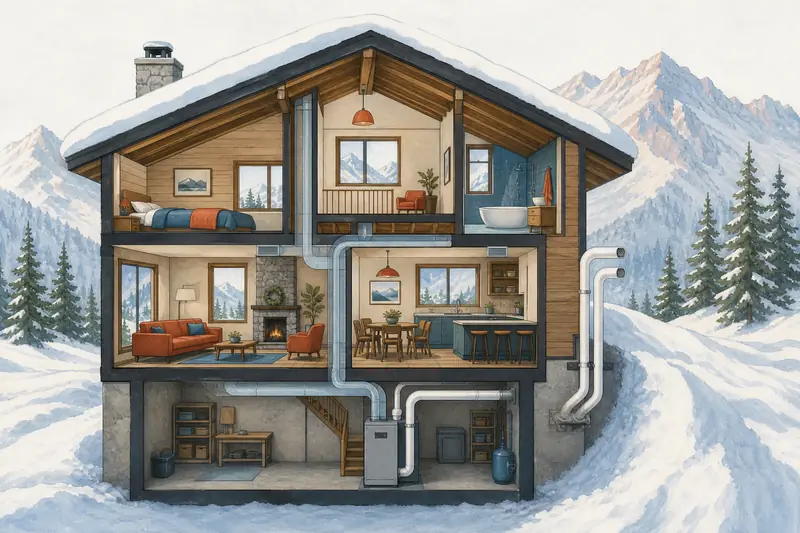
Gas furnaces, boilers and water heaters set up for thin air, and sizing for 8,880 heating degree days.
Every town is far above 2,000 feet, the height where gas-appliance makers start talking about derating. What furnace altitude derating means
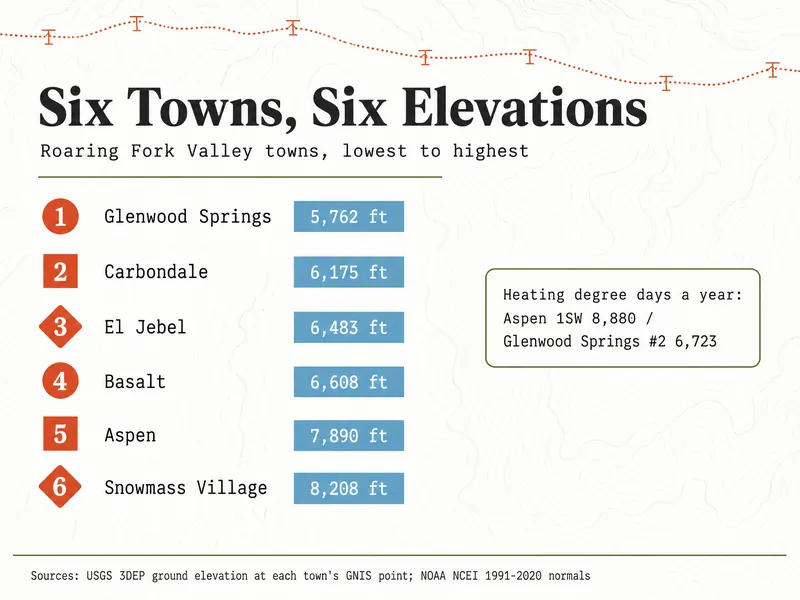
Elevations: USGS Elevation Point Query Service at each town's USGS place-name point, read October 2026. Snowmass Village sits in a side valley off the Roaring Fork.
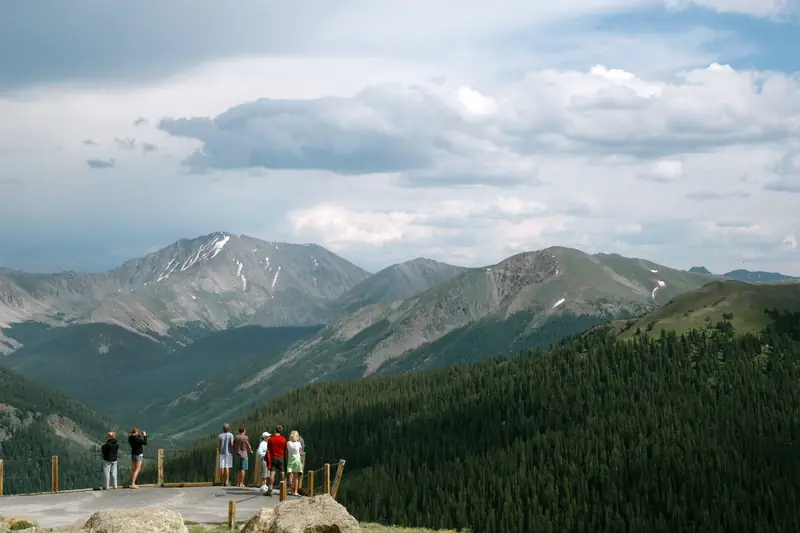
Roaring Fork Valley heating works differently because every town sits between 5,762 and 8,208 feet: gas appliances are derated, winters run long and dry, and local rebates and snowmelt rules set the budget.
Glenwood Springs · Carbondale · El Jebel · Basalt · Aspen · Snowmass Village
Written by the Upvalley Heat desk from manuals and official pages · how figures are sourced · Rechecked
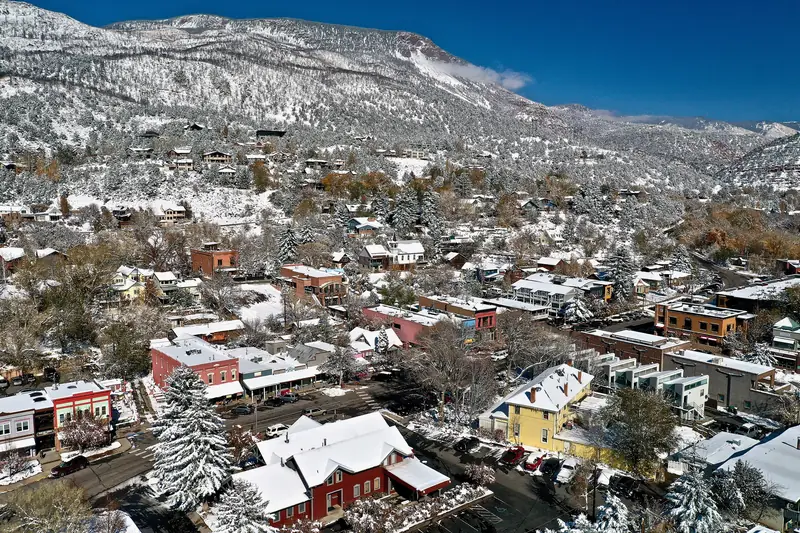
Run 1
Gas furnaces, boilers and water heaters set up for thin air, and sizing for 8,880 heating degree days.
Run 3
Floor heat, boiler and glycol care, and what snowmelt costs under local fees.
Run 5
Holy Cross, Black Hills, CORE, the Colorado heat pump credit, REMP and permits.
First tracks
Upvalley Heat publishes heating and cooling notes for the six towns along the Roaring Fork, from public manuals, codes and utility pages. It is not an HVAC contractor, a utility or a government office; every answer below points to the agency, utility or maker that set the rule.
The valley by the numbers
| Town | Elevation (USGS map point) | Electric utility (check your bill) | Gas utility | Local rebate body, late 2026 |
|---|---|---|---|---|
| Glenwood Springs | 5,762 ft | City of Glenwood Springs Electric or Holy Cross Energy | Black Hills Energy | CLEER; city electric rebates waitlisted since July 1, 2026; CORE paused in Garfield County |
| Carbondale | 6,175 ft | Holy Cross Energy | Black Hills Energy | CLEER; CORE paused in Garfield County |
| El Jebel | 6,483 ft | Holy Cross Energy | Black Hills Energy | CORE, paused in unincorporated Roaring Fork Eagle County |
| Basalt | 6,608 ft | Holy Cross Energy | Black Hills Energy | CORE, still taking applications |
| Aspen | 7,890 ft | City of Aspen Electric (part of the city) or Holy Cross Energy | Black Hills Energy | CORE; City of Aspen and MEAN (latest flyer fall/winter 2024) |
| Snowmass Village | 8,208 ft | Holy Cross Energy | Black Hills Energy | CORE |
All six towns appear in Black Hills Energy's gas tariff, though gas does not reach every street. Xcel Energy does not appear as a provider for these towns in the sources checked; your bill shows which electric utility serves your address.
Altitude changes Roaring Fork Valley heating because thin air holds less oxygen, so gas burners must fire at a lower rate, and because the higher towns are colder for longer. Trane's furnace manual states the default: from 2,000 feet up, reduce input 4% for each 1,000 feet above sea level, unless the model is certified otherwise.
Some are. Carrier's 59SC5A uses 2% per 1,000 feet, and kit thresholds run from 4,000 to 7,501 feet depending on the maker, so there is no single valley-wide setting. What is true everywhere here is that each town sits above the elevation where most makers want high-altitude parts or settings, and that work belongs to a licensed installer. The altitude section covers furnaces, boilers and water heaters, and sizing.
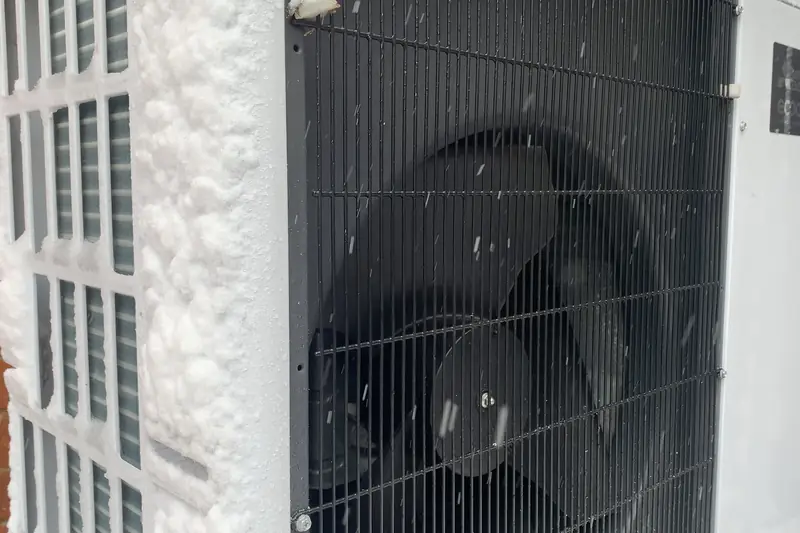
Yes, cold-climate heat pumps work here when they are chosen and sized for the cold. ENERGY STAR's cold-climate criteria require a COP of at least 1.75 at 5°F and at least 70% of the unit's 47°F heating capacity at 5°F; the NEEP list uses its own specification, which has no 70% rule.
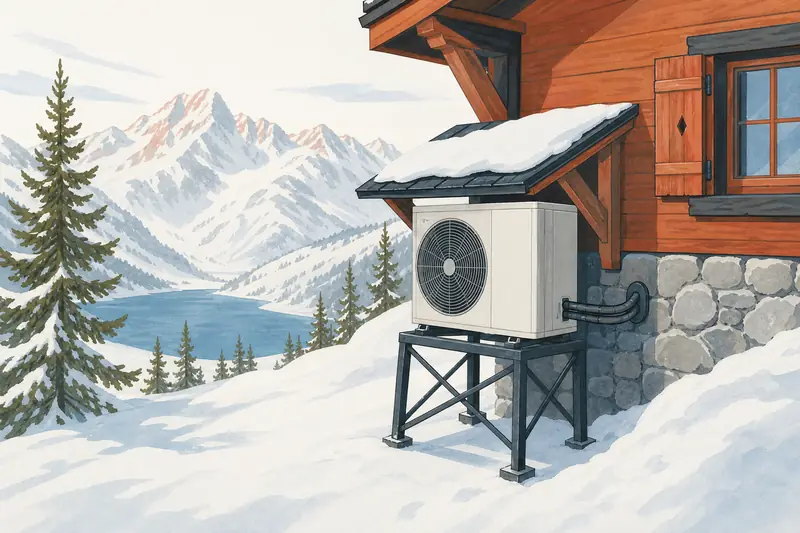
Local rules point the same way. Holy Cross Energy's 2026 rebate asks for HSPF2 of 9 or more for ducted systems and 10 or more for ductless, a Manual J load calculation and an outdoor unit raised at least 12 inches. Aspen's energy code goes further: where a forced-air system gets split-system cooling, that equipment must be a heat pump sized to provide primary heat. Thinner air also carries less heat across the outdoor coil, so ask how the maker handles altitude. More in the heat pumps section.
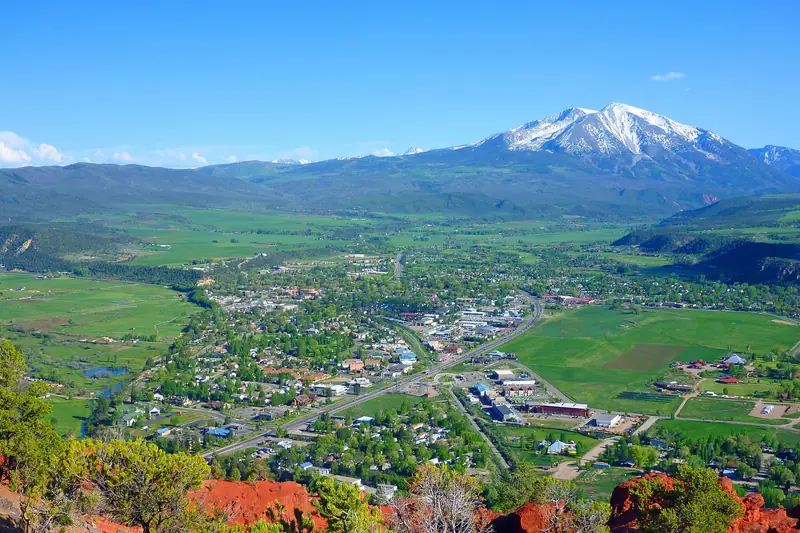
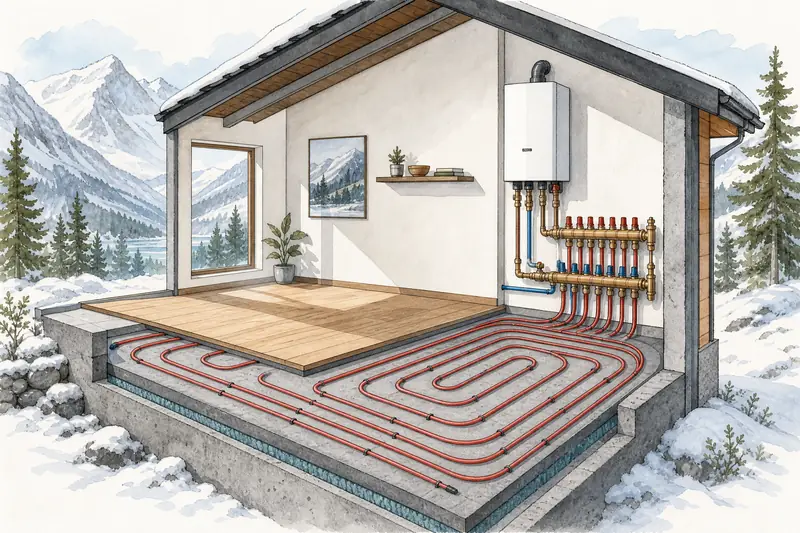
Radiant floors suit mountain homes as a comfortable, quiet way to heat, while snowmelt is an outdoor energy use that Aspen and Pitkin County charge for. REHAU's radiant design manual lists 85°F as the typical maximum floor surface temperature in occupied areas.
Snowmelt is where local rules bite. Aspen and Pitkin County's Renewable Energy Mitigation Program (REMP) fee for residential snowmelt is $52.62 per square foot, and Pitkin County lets residential snowmelt run only with moisture on the ground and outdoor air from 20°F to 40°F, and never idling. Snowmass Village follows a separate 2011 offset program of its own. Gas customers who install a snowmelt boiler rated 95% AFUE or higher can claim $1,815 from Black Hills Energy in 2026. See the radiant and snowmelt section.
Dry mountain air needs moderate humidity, smoky days need better filtration, and every gas-heated home needs working carbon monoxide alarms. The EPA's mold and moisture page says to keep indoor relative humidity below 60%, ideally 30% to 50%; condensation on windows is a sign of too much.
For wildfire smoke, the EPA suggests a MERV 13 filter or the best your system can take, recirculating air and running the fan on "On" while smoke lasts. On carbon monoxide, Colorado's 2009 law requires an alarm within 15 feet of the entrance to each sleeping room in homes with fuel-burning appliances when they are sold or get permitted work, and the CPSC advises one on every level. When an alarm sounds or anyone feels ill, get outside into fresh air first, then call 911; if you smell gas, leave and call Black Hills Energy from outside. The indoor air section covers humidifiers, smoke, CO and ventilation.
Utility rebates are the main money left in 2026, now that the federal home energy credits are gone. A heat pump can earn $3,500 from Holy Cross Energy (double for income-qualified members) once you join Peak Time Payback and file within 90 days; on the gas side, a 95% AFUE furnace brings $350 from Black Hills Energy and a 95% AFUE boiler $1,000.
Colorado's heat pump tax credit continues at $1,000 for air-source systems, but the registered contractor claims it and passes at least 33% to you as an invoice discount. The state's HEAR rebates for single-family homes closed on August 1, 2026, and CORE paused its residential rebates in Garfield County and in Roaring Fork Eagle County from September 30, 2026, while Basalt and Pitkin County projects stay eligible. Programs change; check before you buy. Details are in the rebates and rules section.
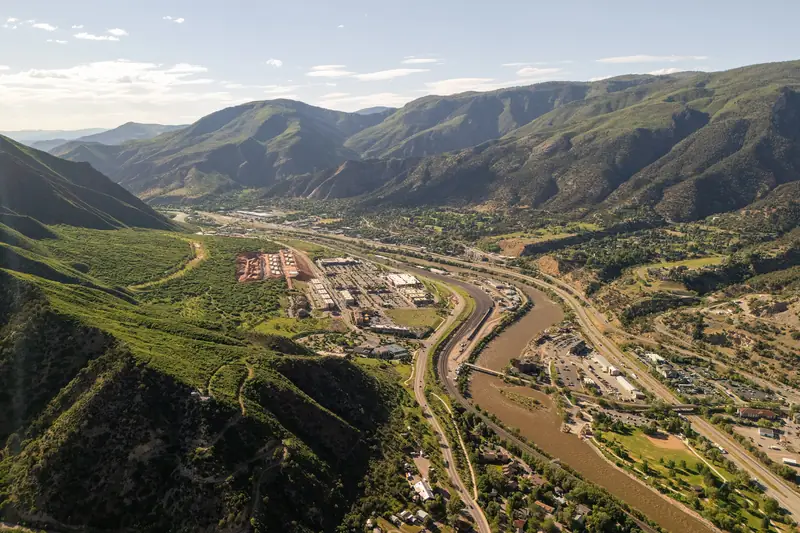
When the heat fails in a cold snap, keep the house safe first, then make only the simple checks a homeowner can make. Keep the thermostat at 55°F or more whenever possible, open sink cabinets on outside walls and know where your main water shutoff is, as Colorado Springs Utilities advises.
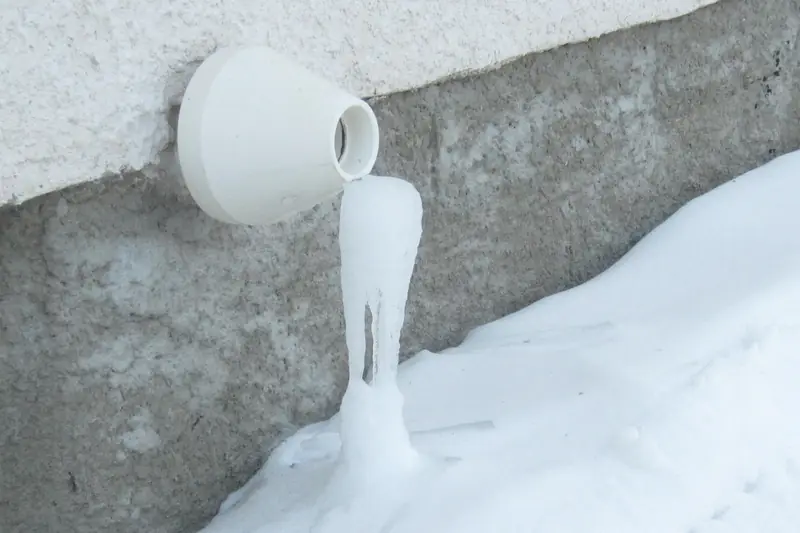
Most gas furnaces and boilers need electricity for their controls, igniters and blowers or pumps, so a power cut stops them. Run a generator only outdoors, at least 20 feet from windows, doors and vents (CDC), never use an oven or grill for heat, and keep space heaters 3 feet from anything that burns. Safe checks are the thermostat, the filter, a tripped breaker, the furnace service switch and snow on the vent pipes, cleared by hand. If you are unsure, stop and call a qualified technician. The cold snaps section has the full checklists.
Avalanche report: how this page was checked
This page draws on USGS ground elevations for the six towns; NOAA NCEI 1991–2020 normals; installation manuals from Trane (2020) and Carrier (2019); Black Hills Energy's Colorado tariff and 2026 rebate form; Holy Cross Energy's 2026 residential rebates; CORE's 2026 rebate page; the Colorado Energy Office's heat pump credit and home energy rebate pages; IRS 25C guidance; ENERGY STAR and NEEP heat pump criteria; the 2021 Aspen Energy Code, Pitkin County Title 11 and REMP calculators; REHAU's radiant design manual; EPA, CPSC, CDC and Colorado Springs Utilities safety pages; and Colorado's 2009 carbon monoxide alarm law, each read in October 2026. Not covered: Xcel Energy programs, street-level gas availability and ASHRAE design temperatures, none of which a primary source confirmed for these towns.
Yes. It shares the valley's gas utility, Black Hills Energy, and Holy Cross Energy serves parts of Garfield County too. At 5,762 feet it is the lowest and mildest of the six towns, with about 6,723 heating degree days a year at the Glenwood Springs #2 station.
Snowmass Village, at 8,208 feet by USGS ground elevation at its map point, which sits up on the hillside village. Aspen's point measures 7,890 feet. Both are high enough that every gas appliance needs altitude setup.
Not for every program: the state's HEAR rebates never covered second homes, and their single-family round has closed. Utility programs such as Holy Cross Energy's set their own terms per account, so read the current rules before you buy.
Part of Aspen is served by the city-owned City of Aspen Electric, which serves only inside city limits, and the rest by Holy Cross Energy. Your bill shows which one serves your address, and that decides which rebates you can use.
Black Hills Energy's tariff names all six towns, but a tariff lists franchised areas, not every street. Ask Black Hills Energy whether a line reaches your property before planning around gas.
No. This site does not install, service or refer, and it does not rate local businesses. CORE's Energy Concierge helps residents find rebates, assessments and contractors, and CLEER offers free energy coaching.
Start a run