Staying Warm in a Winter Power Outage
In a winter power outage most gas furnaces and boilers stop, because their controls, igniters and blowers run on electricity; stay warm with layers, safe heat and a generator at least 20 feet outside.
Written by the Upvalley Heat desk from manuals and official pages · how figures are sourced · Rechecked
First tracks
- A modern gas furnace needs 115-volt household power; Carrier's 59SC5A manual says that with its door switch open "no component operation can occur", and an outage cuts power the same way.
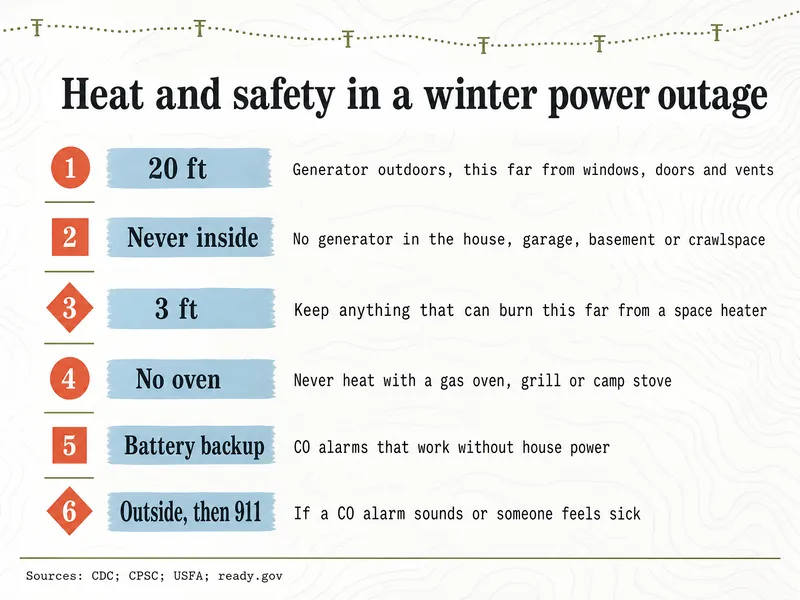
- CDC, CPSC and ready.gov agree: run a generator outdoors only, at least 20 feet from windows, doors and vents, never in a garage, basement or crawlspace.
- The U.S. Fire Administration says to keep anything that can burn at least 3 feet from a space heater and to turn it off when you leave the room or go to bed.
- Never heat a home with a gas oven or stovetop, a grill or a camp stove (ready.gov, CDC).
- Carbon monoxide alarms with battery backup keep working when the power is out; if one sounds, get everyone outside, then call 911 (CPSC).
- CPSC's May 2026 release recommends portable generators with a CO shut-off feature, certified to PGMA G300-2023 or UL 2201-2023.
Why does the heat stop in a winter power outage?
The heat stops because almost every modern gas furnace and boiler depends on electricity to run its controls, light its burner and move heat through the house. Carrier's 59SC5A installation manual says the furnace "must have a 115-v power supply", and Lennox's EL297 manual describes an automatic hot surface ignition system and warns, "Do not attempt to manually light burners on this furnace."
So a full gas line does not mean heat. The inducer fan, the igniter, the blower for a forced-air system and the circulator pumps for a boiler all stop with the power. A heat pump stops too. Gas fireplaces and wood stoves that need no power can keep a room warm, but they are vented appliances, and a blocked flue still pushes carbon monoxide indoors.
Valley nights are long and cold: NOAA's 1991–2020 normals put the January average low at the Aspen 1SW station at 9.9°F. No source gives a reliable figure for how long a house stays warm without heat, so plan for pipes as well as people; the frozen pipes page covers what to do with the water.
Outage numbers that matter
- 20 ftMinimum generator distance from windows, doors and ventsCDC
- 3 ftClear space around a space heaterU.S. Fire Administration
- 9.9°FJanuary average low, Aspen 1SW (1991–2020)NOAA NCEI
How do you stay warm safely in a power outage?
Stay warm by gathering everyone into one room, dressing in loose layers, and using only heat sources that are safe indoors. Ready.gov's power outage page adds: have a flashlight for every household member, plan ahead for medical devices that need power, and "go to a community location with power if heat or cold is extreme."
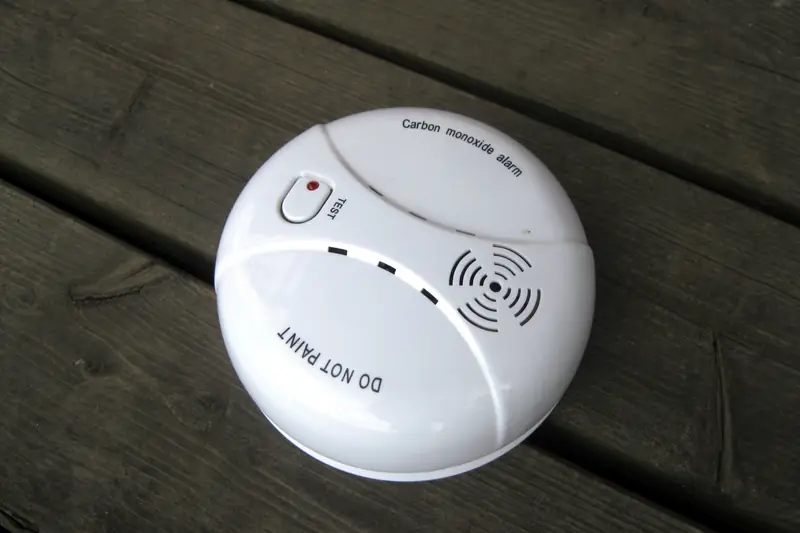
Before winter, check that your carbon monoxide alarms have battery backup. Ready.gov says to put CO detectors with battery backup in central locations on every level, and CPSC says the same about every level and outside sleeping areas; that is advice. Colorado's 2009 law requires an alarm no more than 15 feet from the doorway of every room used for sleeping, in the situations it lists, such as a home sale or permitted furnace replacement. More detail is on the carbon monoxide safety page.
If you smell gas at any point, leave first. Then, from outside and well away, call 911 and Black Hills Energy; do not flip light switches or use phones inside.
Where can a generator run safely?
A portable generator runs safely only outdoors, at least 20 feet from windows, doors and vents, with its exhaust pointed away from the house. The CDC says never to use a generator inside a home or garage "even if doors and windows are open", and CPSC adds basements, crawlspaces and sheds to that list.
In deep snow, that means clearing a spot well away from the house rather than tucking the generator under a deck or into an open garage. CPSC's May 2026 release recommends generators with a carbon monoxide shut-off feature and says models certified to PGMA G300-2023 and UL 2201-2023 include CO safety technology.
Running a furnace from a generator is a separate job. Carrier says the furnace's electronics need power with "a smooth sinusoidal waveform" and that other power "may damage the furnace electronics or cause erratic operation." Ask a licensed electrician how to connect a generator to the house, and ask your heating technician whether your model will run on it.
Are space heaters safe in a power outage?
An electric space heater is only useful in an outage if you have safe generator power for it, and it is only safe with space around it. The U.S. Fire Administration says to keep anything that can burn at least 3 feet from all heat sources, including space heaters, fireplaces and wood stoves, and to turn space heaters off when you leave the room or go to sleep.
Fuel-burning heaters bring the carbon monoxide risk indoors. Use only heaters made for indoor use, follow their manuals, and keep CO alarms working nearby. The USFA also says to have heating equipment and chimneys cleaned and inspected every year by a professional.
| Heat source | Indoors? | Rule from the source |
|---|---|---|
| Portable generator | Never | Outdoors, at least 20 feet from windows, doors and vents |
| Electric space heater | Yes, with care | 3 feet of clear space; off when you leave the room or sleep |
| Gas oven or stovetop | Never for heat | Raises carbon monoxide risk (ready.gov, CDC) |
| Charcoal grill or camp stove | Never | Outdoors only, at least 20 feet from windows |
| Fireplace or wood stove | Yes, if maintained | 3 feet clearance; chimney inspected yearly (USFA) |
What should you never use for heat?
Never heat a home with a gas oven or stovetop, a charcoal grill, a camp stove or a generator. Ready.gov says a gas stove or oven used for heat "increases your risk of carbon monoxide poisoning", and the CDC's carbon monoxide page says plainly, "Never heat your house with a gas oven."
Carbon monoxide has no smell or color. The CDC lists headache, dizziness, weakness, upset stomach, vomiting, chest pain and confusion as the common symptoms, and warns that people who are asleep can die before they notice anything. If an alarm sounds or anyone feels these symptoms, get everyone outside to fresh air, then call 911; CPSC's 2026 release says never to ignore an alarm.
What should you do when the power comes back?
When the power comes back, let the system restart on its own and check that it is safe to run. Ready.gov says to turn off or disconnect appliances and electronics during the outage because power "may return with momentary surges or spikes."
Then walk outside and look at the furnace's two plastic vent pipes. A storm that knocks out power often buries vents, and furnace makers mount them 12 inches or more over the likely snow depth; clear packed snow by hand or with a soft brush. Check the thermostat, and if the furnace does not start, work through the no-heat checklist before calling a technician. Lennox's manual says not to use a furnace if any part has been underwater.
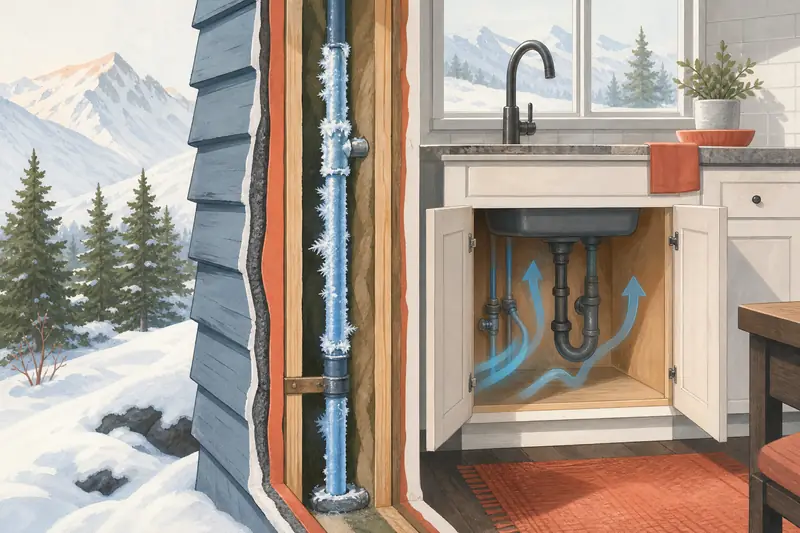
Check the house for frozen or leaking pipes, especially in cabinets on outside walls. If you are unsure about anything near the equipment, stop and call a qualified technician. The cold snaps overview links the rest of this section.
Avalanche report: how this page was checked
This page is based on the CDC carbon monoxide page (updated October 2026), CPSC's carbon monoxide information center and its May 27, 2026 generator release, ready.gov's power outage page (updated June 2026), the U.S. Fire Administration's heating fire page (reviewed May 2023), Carrier's 59SC5A and Lennox's EL297 installation manuals, Black Hills Energy's gas safety page, Colorado's 2009 carbon monoxide alarm law, and NOAA NCEI 1991–2020 normals for Aspen 1SW. Left out: any estimate of how long a house stays warm without power, which no source gives; transfer switch wiring steps, which belong to a licensed electrician; and Holy Cross Energy outage guidance, because its outage page could not be opened.
Lift-line questions
Can a gas fireplace heat the house when the power is out?
It depends on the model: the appliance's own manual says whether it runs without household power. If it does, keep its vent clear, keep 3 feet of clear space around it and keep CO alarms working nearby.
Can you run a generator in an open garage?
No. The CDC and CPSC both say never to run a generator in a garage, even with the door open; keep it outdoors at least 20 feet from windows, doors and vents.
Will a small inverter generator run a furnace?
Carrier's manual says its furnace needs power with a smooth sine waveform and that other power can damage the electronics. Ask the furnace maker or your technician, and have a licensed electrician make the connection.
Is it safe to warm up with the oven door open for a few minutes?
No. Ready.gov and the CDC both say never to heat a home with a gas oven or stovetop, because of carbon monoxide.
Do battery-only CO alarms work during an outage?
Yes, as long as the batteries are good. Plug-in and hard-wired alarms need battery backup to keep working, which is why ready.gov says to use alarms with battery backup.
Where should you go if the house gets too cold?
Ready.gov says to go to a community location with power when cold is extreme. Check with your town or county for warming centers during a long outage.
Should you switch the furnace off during the outage?
Ready.gov advises turning off or disconnecting appliances and electronics, because power may return with surges. Follow your furnace manual for its own power switch.
Where to go from here
Back to the base lodge: Roaring Fork Valley heating, town by town